With a nonbinding advisory referendum on the Nov. 3 ballot asking Union County voters whether to retain the county’s sole-commissioner form of government or move to a multi-member commission board, District 8 State Rep. Stan Gunter invited the University of Georgia’s Carl Vinson Institute of Government to host a Town Hall Tuesday, Sept. 22, to discuss the proposed change.
If voters approve the referendum, Gunter has agreed to sponsor the necessary legislation to change Union County to a multi-member form of government, which he hopes to have signed by the governor in time for the 2028 elections so the new commissioners can be seated in 2029.

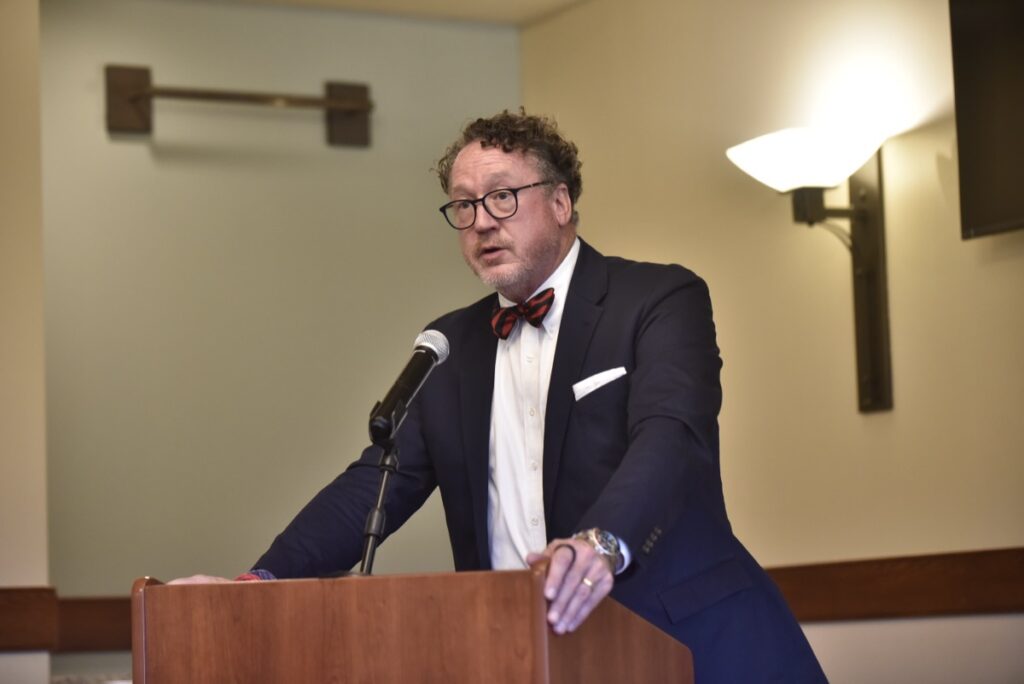
During a 45-minute presentation at the Union County Community Center, Rex Facer of the Carl Vinson Institute outlined the potential costs and operational differences involved in moving from Union County’s current form of government to a five-member commission.
The institute has not conducted a full fiscal assessment of changing forms but estimates transition costs at approximately $50,000 to $150,000, according to Facer. Ongoing operating costs are estimated to increase by $110,000 to $360,000 annually under a five-member commission.
The cost of the change was a central focus during the question-and-answer segment, in which Facer, Gunter, outgoing District 51 State Sen. Steve Gooch and District 9 State Rep. Will Wade answered questions from the audience.
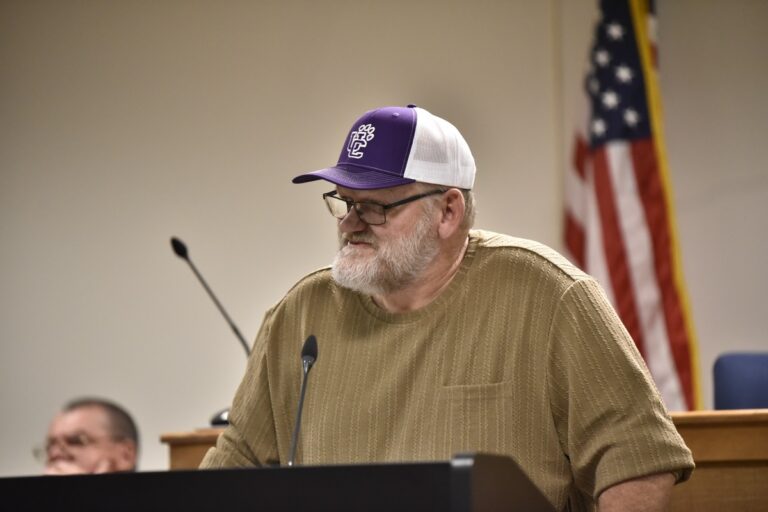
Approximately 30 attendees registered to ask questions, many of which focused on the cost of building new office space, along with salaries for the new commissioners and their staff.
Facer noted that his figures were estimates based on what he has seen in other communities and that there was no way to know exactly what the total cost would be for Union County. The estimates also did not include any new construction that could be required.
The consensus among the residents asking questions was that a five-member commission would be too costly and too drastic a change, while likely increasing property taxes. However, a three-member commission appeared to receive some support as a more viable alternative.
When asked about the possibility of another referendum with three options on the ballot, Gunter said another referendum could delay the process by two to four years.
“View it this way: what you’re voting on is a multi-member commission,” Gunter said.
He later explained that, if the referendum passes, he could structure the legislation for either three or five commissioners, as well as part-time or full-time positions, after receiving additional public feedback from Union County residents next year.
Under his proposed timeline, which could potentially include another referendum a year from now, the legislation would pass in time for 2028 elections to seat the new commissioners.
During the Q&A, Union County Tax Commissioner Lee Knight asked Gooch to discuss his experience in Lumpkin County under a multi-member form of government. Gooch said the situation was completely different from Union County’s current circumstances.
When Gooch ran for sole commissioner in the early 2000s, one of his campaign promises was to put a multi-member form of government on the ballot, which ended up passing. At the time, however, Lumpkin County was bankrupt, with its bank accounts frozen and payroll and bills going unpaid.
“It was a totally different scenario than what you have in Union County,” Gooch said. “I don’t know of any of these problems going on in Union County.”
Gooch urged residents to do their research before casting their ballots in November.
“There’s not a right or wrong answer,” he said. “There’s going to be problems regardless of if you have one, three, five, 11, 15 or whatever number you want.
“But if you do your research, you’re going to find that the City of Blue Ridge is in turmoil year after year. They’ve had lawsuits against one another on the city council. They’ve had investigations on each other. They’ve spent tens of thousands of dollars trying to turn each other in for wrongdoing. Now we have a good mayor and council over there that are turning things around, but it’s been very controversial.
“There are a lot of variables and a lot of differing opinions floating around this community. I think that’s why Stan wants to put this on the ballot. He wants to hear from the community he represents. And whatever happens in November is not the end of it – it’s just the beginning. So, let’s make sure we get this right.”
Resident Will Nelson raised concerns about a new building required to house the new commissioners and their staff before asking voters to consider what a multi-member commission would mean for Union County.
“If we go to five, is our quality of life going to increase?” he asked. “Or are we going to have a lot more confusion, a lot more elections and a lot more (candidate) yard signs? Is our quality of life going to get better because we have five commissioners over the one?”
While potential costs dominated the Q&A, resident Adam Wright approached the issue from a different perspective, asking whether a multi-member commission would give citizens more avenues to address grievances with local government.
“For me personally, it’s about checks and balances,” Wright said. “Hypothetically, let’s say we had a sole commissioner that said, ‘I’m closing the dog park, and I’m done with it. End of story.’ Not saying that would happen, but if it did, where do the citizens go for recourse under a sole commissioner?”
“That raises a legitimate issue,” Facer answered. “There’s only one access point (under a sole commissioner), but under a multi-member, there are different access points.”
Resident Rick Davenport commented that whatever decision voters make, they should do so with future generations in mind.
“I’m here tonight for my nine grandkids and my four kids,” he said. “I’ve lived here for 74 years, and I’m going to die here, and I just want to make sure it’s a good place for them.”
During Facer’s presentation, he contrasted the two forms of government, noting that Union County is one of seven remaining counties, out of 159 counties in Georgia, still served by a sole commissioner.
Under the current system, legislative and executive authority is concentrated in the sole commissioner, while a five-member commission would divide those responsibilities among the board, he explained.
And a multi-member commission board could hire a professional county manager or administrator to oversee day-to-day operations, while the elected commissioners would retain governing authority.
He added that it’s not uncommon for commissions to appoint multiple managers to oversee different areas, such as roads and recreation.
Any change to the county’s governing structure would ultimately require action by the Georgia General Assembly. The November referendum is advisory and nonbinding, meaning a vote in favor would express support for changing the system but would not itself create a five-member commission.