A change in the form of county government from a sole commissioner to a multimember commission board may be in Union County’s future, but there are several steps in that process, and District 8 State Rep. Stan Gunter first wants to gauge people’s appetite for such a change.
That’s why, once the Georgia General Assembly’s current legislative session is over – lawmakers are expected to adjourn around April 4 – Gunter will be working to schedule a series of educational town hall meetings in Blairsville to foster local debate on the issue.
For these town halls, Gunter will be inviting the University of Georgia’s Carl Vinson Institute of Government, local elected officials, District 51 State Sen. Steve Gooch – who oversaw, as a sole commissioner, the same transition in Lumpkin County years ago – and other stakeholders.
Information on what the change in government would mean will be provided to better inform the public, with a key aspect of the meetings being to solicit input and questions from attending community members.
The town hall process will potentially culminate in Gunter introducing legislation known as a “local act” at the General Assembly’s next session to call for a nonbinding advisory referendum specific to Union County.
If this local act is indeed introduced next year and passes out of the assembly, a referendum will appear on 2026 midterm ballots in Union County to ask voters if they wish to change from a sole commissioner to a multimember board of commissioners, with much riding on the results.
Like the referendum call, changing government form can only be done via passage of an act in the General Assembly, and as the legislators representing Union County, Rep. Gunter and Sen. Gooch would be responsible for prepping such legislation to be enacted if a referendum passes.
But first: the town halls.
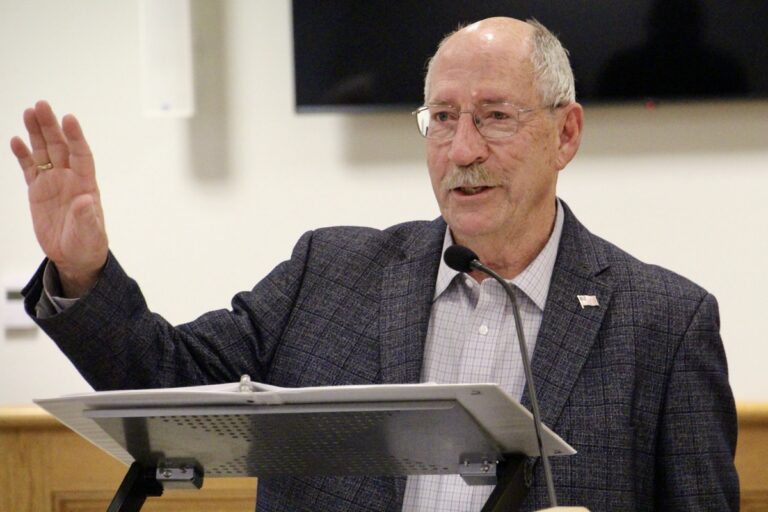
“I don’t want to just throw it on the ballot and people not be educated about it,” Gunter said.
Himself a resident of Union County, Gunter said he would honor the nonbinding result, whatever it may be, even if he personally does not see a need to change government forms at present.
“But I’ve got enough constituents out there that are raising Cain about this and want it done, and I’m not hearing from anybody that is happy and all that,” Gunter said, citing a single exception of an individual who messaged him last week.
“People need to get active, and they need to get involved in their community,” Gunter continued. “That’s the whole idea behind these town halls, is to hopefully get people to come out, to ask questions, to listen to what we have to say about what all it takes to do that.
“I hope that they would agree that that’s not something we want up here, but that’s my personal opinion. We would need to see what the voters are going to do, and that’s where I’m coming from. If it’s overwhelmingly ‘no’ in the town hall meetings, that may bring it all to an end.
“But right now, I don’t hear it from anybody but the ones that want to have (the change).”
For Gunter, the bottom line is this: if a referendum ends up being called and a majority of voters signal that they want the change, “then that’s what they’ll get.”
The request for a referendum made his radar in February when a small group of constituents visited him at the State Capitol; Gunter said he is unsure if the people who came to see him were the ones behind the referendum petition that was deemed invalid locally last November.
State Sen. Gooch has also said that the soonest a referendum could be called would be 2026.
In a preview of Gunter’s reasoning, last year, Gooch described a need to hold hearings to allow “input from everybody,” plus considerable deliberations, including with professional consultants, to enumerate the many specifics of the replacement government before a single vote is cast.
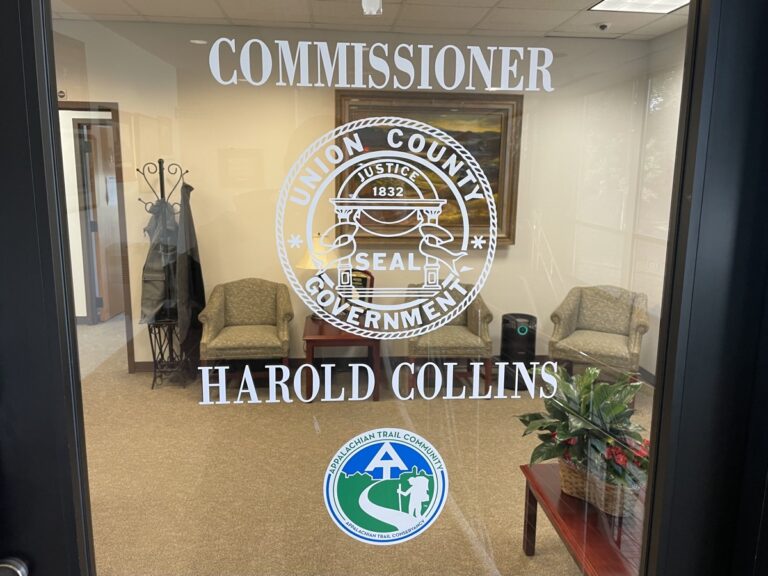
Gooch went on to say that if a 2026 government change referendum were to pass local electoral muster, the earliest election to fill the new board would be in 2028, as Sole Commissioner Harold Collins, who won election last year, is guaranteed the completion of his four-year term.
And that is a best-case scenario; it could take longer to flesh out the particulars of a new form of government, which would have to be undertaken by the offices of Sen. Gooch and Rep. Gunter, with plenty of input from other entities, if the local government is not the requesting party.
“People need to be involved in their government,” Gunter said. “I think the last election may have shown them that. And hopefully they will be, and we will know better what our course of action is once we have a chance to sit down and talk about this.”