February 2026 is the 62nd anniversary of American Heart Month, which President Lyndon B. Johnson established to urge people “to give heed to the nationwide problem of the heart and blood-vessel diseases, and to support the programs required to bring about its solution.”
Since that first Heart Month observance in 1964, medical knowledge and technology have come a long way, but heart disease stubbornly remains the leading cause of death among Americans.
Thankfully, North Georgia residents have state-of-the-art heart health options right in their own backyard, eliminating the need to travel to Gainesville, Atlanta or beyond to receive potentially life-saving diagnostics and treatment.
The Georgia Heart Institute, the comprehensive heart and vascular service line of Northeast Georgia Health System, is conveniently located in Blairsville at 346 Deep South Farm Road, Suite B, behind North Georgia Family Medicine.
Patients don’t even need a referral to make an appointment with a cardiology specialist; if they have a concern about their heart health and risk factors for disease, all they have to do is call 706-835-1914 or visit georgiaheartinstitute.org/blairsville.
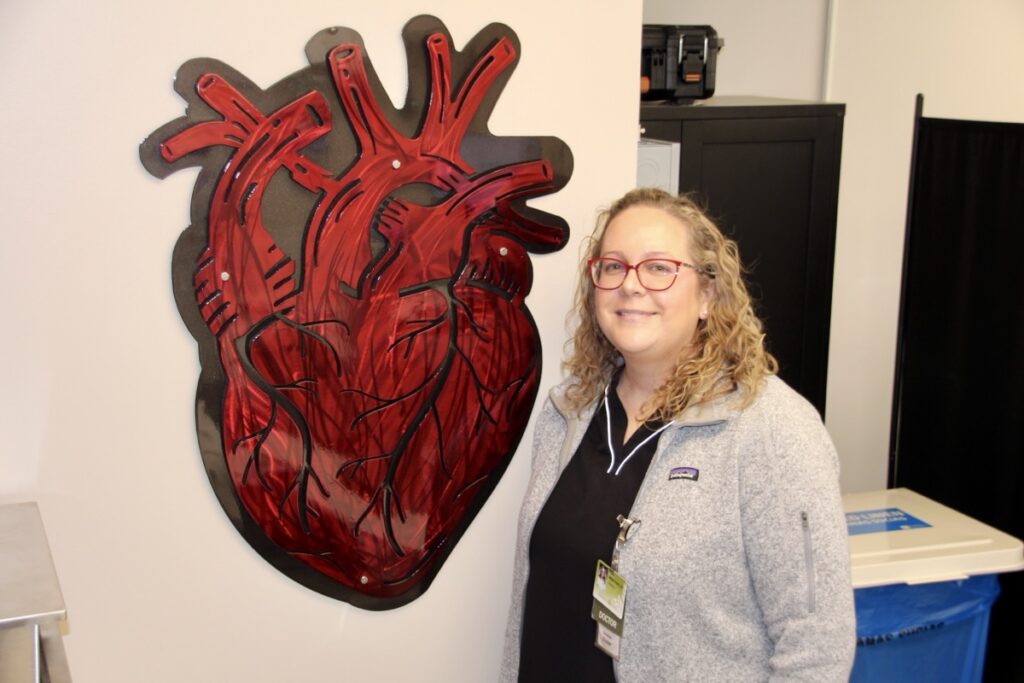
Dr. Megan Smith is the lead cardiologist at Georgia Heart and a Blairsville resident. She and her dedicated team of specialists are excited to announce that Georgia Heart has launched a suite of new local services, advancing their pursuit of improving rural health care throughout the region.
Beginning this month, the institute has established an AFib clinic so that people diagnosed with atrial fibrillation in the ER or by their primary care doctor can get connected quickly with a subspecialist rather than going to a general cardiologist first.
Georgia Heart is also increasing the availability of its electrophysiologist, which is a cardiologist who specializes in treating heart rhythm disorders. This specialist is overseeing the new AFib clinic and will now be traveling here weekly instead of every other week.
Additionally, the Blairsville campus has added a heart failure specialist who will also be doing regular in-person days, thereby saving long drives out of town for heart failure patients who require frequent doctor visits.
These new services come on the heels of the ribbon-cutting ceremony Georgia Heart Blairsville held in September for its new cardiac PET machine, which performs multiple types of advanced testing that used to require patients leaving the mountains.
The PET machine at Georgia Heart – the first and only one in the region – scans for blockages caused by plaque buildup in the blood vessels of patients’ hearts, helping cardiologists to decide the best treatment options.
Specifically, the high-resolution images reveal the severity of blockages and how blood flow is restricted to the rest of the body, providing a clear picture of a patient’s heart health by illuminating their level of disease, if any, and risk of a cardiac event.
PET scans also show how well the heart is working after a procedure or surgery, and the machine can perform stress tests that demonstrate how well a patient’s heart functions under exertion.
In addition to comprehensive cardiac care, Georgia Heart offers a wide range of vascular testing and treatment services, ensuring that patients’ needs are met for their entire circulatory system.
On top of these other improvements to rural health care, telemedicine solutions are available in the office or over the phone and internet to supplement treatment for patients who live an inconvenient distance from their medical providers.
PREVENTION
Dr. Smith is thrilled to be offering so many services to area residents, providing all the lab tests and imaging studies people may need so close to home at Georgia Heart. But she also advises folks to use the opportunity of Heart Month to think about how they can prevent heart disease.
“Heart disease is still the No. 1 killer in the world, and so in order to make the biggest difference, prevention is where it starts – you can even start at young ages,” Dr. Smith said. “The easiest patients to think about are those with family history.
“So, if mom, dad, siblings, even grandparents had a history of heart disease, whether it be stents, heart attack, stroke, or heart failure, those are the patients that, the earlier you start, the more change that you can create.
“The biggest things that we can work on in terms of risk factors, it’s nothing flashy; it’s keeping your blood pressure controlled, keeping your blood sugar controlled, keeping your cholesterol controlled, keeping your weight and your stress controlled, and quitting nicotine products.
“They’re not exciting, but those are the things that really will move the mark. And it usually begins with your primary care doctor – having a wonderful relationship with your primary care doctor that can watch these risk factors and help you curate a plan for keeping them at bay.”
Georgia Heart works closely with primary care doctors and their patients to coordinate preventive care, as the local cardiovascular team would rather people avoid having to face emergency medical events and invasive treatments if they can help it.
The institute has multiple ways of detecting disease before symptoms ever even start, like conducting blood tests to measure lipid concentrations and ordering other tests such as calcium scans that gauge levels of plaque buildup in arteries.
Dr. Smith said people of all ages should work to control the predominant risk factors listed above, but she recommends that people 40 years and older go ahead and call Georgia Heart or talk with their primary doctor to learn more about their heart health.
Common symptoms of heart disease are shortness of breath, chest pain, decreased exercise tolerance, and fatigue. However, this can also include additional symptoms ranging from nausea, abdominal pain, back pain, shoulder pain, neck pain, jaw pain, and heartburn, which can be more common in women.
That’s why Dr. Smith advocates that people listen to what their bodies are telling them, and if they notice changes in their physical abilities over time or any concerning symptoms, they should share that information with their doctor.
Dr. Smith also wants residents to know what to do if they or someone they know is potentially experiencing a heart attack: call 911 immediately and wait for help to arrive – do not drive to the hospital.
“When the paramedics come to you, they immediately can do an EKG and see if it’s a certain type of heart attack,” she said, and if it is, EMS can begin treatment right away, arrange helicopter transport and send information ahead to a waiting emergency medical team.
“If you drive yourself to the ER – especially with a lot of areas that we live in here, it takes some time to get to the hospital – you are delaying your care, and time is (of the essence),” Dr. Smith said.
Another simple yet powerful way people can assist medical workers in maximizing outcomes is to learn how to perform CPR, and Dr. Smith recommends that residents take advantage of some of the free training opportunities in the community.
Union General Hospital hosts a monthly “Walk with a Doc” educational program, in which CPR training is available, and folks can learn when the walks are scheduled at https://walkwithadoc.org/.
And be sure to celebrate American Heart Month and help raise awareness by wearing red for National Wear Red Day on Friday, Feb. 6.