In the 2026 General Election, voters will be deciding whether to task District 8 State Rep. Stan Gunter with changing the form of Union County Government.
A nonbinding advisory referendum will appear on Union County ballots asking voters if they want to stay with what they have now, which is a sole commissioner, or completely rewrite the structure of local government to form a five-member commission board.
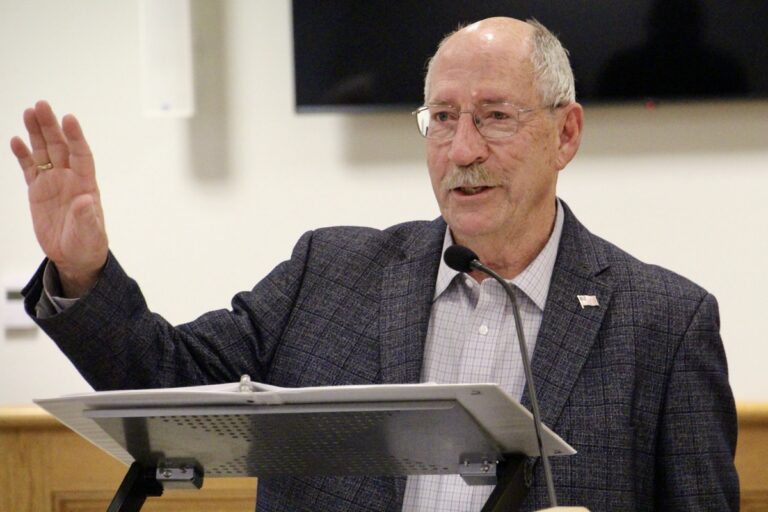
Based on a local grassroots effort seeking greater representation in county governance, Gunter called the referendum at the Georgia General Assembly earlier this year, and to educate voters before the election, he has scheduled a Town Hall for next week.
The University of Georgia’s Carl Vinson Institute of Government will host the Town Hall on Tuesday, Sept. 22, at 6 p.m. inside the Union County Community Center at 129 Union County Recreation Road in Blairsville.
According to the Institute, people can expect to be provided with “factual information about county governance so they can better understand the issue and make an informed decision.”
“Learn how the two models differ in areas such as representation, decision-making authority, administration, accountability, budgeting, and county services,” the event promotion reads.
The presentation will also include an analysis comparing the cost of a sole commissioner to a five-member board. Gunter believes a cost analysis will help people to see what growing local government with additional commissioners will mean for local taxpayers.
“I’ve asked them to talk about a cost analysis,” Gunter said. “How much is it going to cost to go from one commissioner to five? I’m hearing rumors out there that people are saying it’ll be cheaper. And no way is that going to be cheaper – I don’t know where they get this idea.”
According to Gunter, there will be startup costs associated with converting from one to five commissioners, in addition to new regular costs moving forward, like salaries, benefits, equipment such as vehicles, computers and phones, extra administrative support staff, etc.
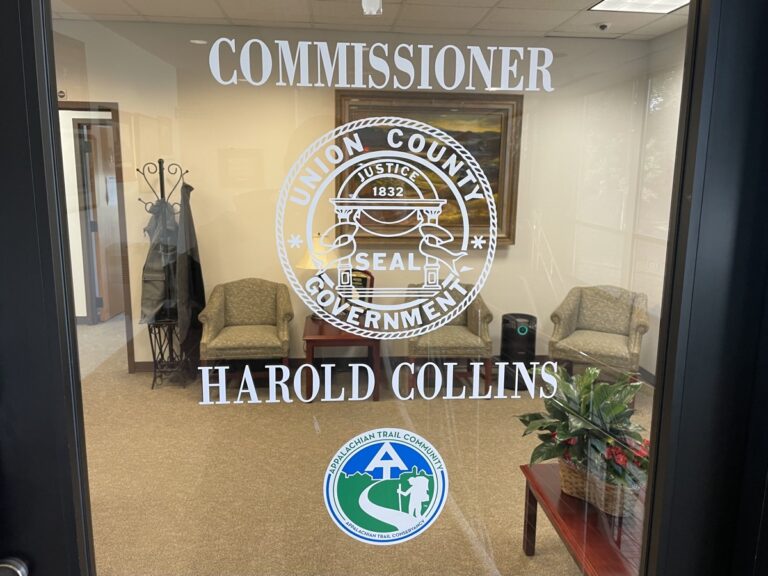
He also highlighted space constraints inside the Commissioner’s Office at the Union County Courthouse to further illustrate his point.
“There’s not enough room in there to add four people to serve as commissioners,” Gunter said. “They cannot have their own offices. I know that, in time, they’re going to want their own offices so they can sit in private and talk to people about the business of the county.”
Added Gunter, “There’s going to be additional costs no matter what. They’re going to have to build another building or expand the building they’re in to get these folks in place, and it’s not going to be cheap.”
Considering all this, Gunter said he wonders how much converting would increase the county budget, and on top of costs, he urges people to think about the efficiency of a sole commissioner versus the difficulty of getting things done with five commissioners who potentially have to debate everything.
He pointed to Bartow County as a sole commissioner form of government that functions well despite having a population that is four times larger than Union County’s, so he believes a sole commissioner could continue to work well here, too, for many years to come.
“People move here for good reasons: quality of life, lower taxes, opportunities, to mention a few,” Gunter said. “Why fix something that is not broken?”
But Gunter said that, ultimately, it’s not his opinion that counts but the opinions of voters, and he encourages the entire local electorate to consider the matter for themselves and head to the polls on Nov. 3: “Come November, everyone has a chance to vote on this issue.”
He has already committed to honoring the referendum result, whatever it may be, even though it will be nonbinding. If it fails, then that will be the end of the initiative. But if the referendum passes, Gunter said that will trigger specific steps to get the new form of government in place.
Upon passage, Gunter would get to work on local act legislation to make the change during the General Assembly’s 2027 Legislative Session. From there, he would partner with legislative counsel at the State Capitol to draft a new form of government for Union County.
He will have the 40 days of the upcoming legislative session to prepare the local act for introduction, which, when passed by the General Assembly and signed by the governor, will enable him to finalize the ins and outs of a multimember commission based on local feedback.
Current Sole Commissioner Harold Collins will be in office through 2028, so the goal would be to get the new form of government ready in time to hold 2028 elections, with the commission board going live with elected members starting in 2029.
The Sept. 22 Town Hall will also feature a Q&A session for people to sign up to speak. In the interest of time, Gunter said questions and comments will be limited to one three-minute period per speaker, with answers provided, if possible, at the event.
For Gunter, education is key: “People need to know the facts before they go to the polls. There’s a lot of misinformation out there. Don’t make your decision based on emotions,” he said.
To that end, he hopes residents take the time to come to the Town Hall. The Community Center will be able to accommodate 300 seats, and Gunter said more can be provided if needed.
Attending the Town Hall alongside Gunter will be special guests District 51 State Sen. Steve Gooch and District 9 State Rep. Will Wade.
Sen. Gooch is uniquely experienced in this arena, having been elected as Lumpkin County’s last sole commissioner in 2000 after pledging to give people a chance to change to a five-member commission board, and he was later elected as Lumpkin’s first commission chair.
Gunter anticipates that Rep. Wade will be in the Georgia Senate next year, making him a crucial partner in ensuring Gunter has cross-chamber support for the necessary local act legislation should the referendum pass this November.