By press time, much of the North Georgia Mountains had been spared an outbreak of wildfires despite increased risk amid ongoing drought, windy conditions, higher temperatures and lower relative humidity, especially during the day.
The region is experiencing its worst drought perhaps since Fall 2016, when tens of thousands of wildland acres burned as North Georgia suffered through a period of “exceptional drought” – the highest classification – which resulted in a total burn ban back then.
Southern portions of the state are undergoing “exceptional drought” now, and currently, Union County is listed as being in “extreme drought,” just one level below the highest classification, with last month marking the second driest March over 132 years of recordkeeping in Union.
There is not currently a burn ban in place, but neighboring North Carolina has issued a statewide ban, which could eventually be in the cards for North Georgia.
“One of the questions we always get is, ‘Is there a burn ban going on?’” Union County Fire Chief David Dyer said. “Right now, there is not, with the reason being, if we put in a burn ban, that stops all burning for everyone.
“So, the contractors, the people who are clearing land for development, can’t burn either during a ban. That hampers everybody for a while. They can manage for a couple of days but not for a couple of weeks. That’s hard to do – it slows down everything they are doing.
“We’re not going to put a burn ban in unless we absolutely have to, like if we start having a great deal of fires that we just can’t control or can’t respond to or are becoming extremely dangerous.”
Chief Dyer wants to make it clear that the call to issue a burn ban is never a “one-person decision.”
“We talk with Georgia Forestry, we talk with the U.S. Forest Service, we talk to other counties,” Dyer said. “Once it goes in one county, it’s a domino effect. So, if Fannin County was to put a burn ban in, I’d get phone calls all day long asking why we aren’t doing it.
“And the results of it are way more than people are thinking; they think we can just turn on a burn ban, then we’re not going to have a fire. That’s not going to happen – people are going to still burn if they want to.”
Presently, Chief Dyer and other fire professionals are encouraging residents not to burn during the drought, but if they do, to use common sense precautions, many of which can be found at https://gatrees.org/, a website operated by the Georgia Forestry Commission.
People should be aware that only hand-piled natural vegetation, such as leaves and limbs, are eligible for burning without a permit, while larger vegetation that needs machinery to be piled requires a burn permit acquired through Georgia Forestry.
As a reminder, it is illegal to burn household trash, construction waste or anything manmade, and doing so can result in a costly citation from the state.
Residents trying to decide whether to burn should make sure fire conditions are safe. Check with the National Weather Service at https://www.weather.gov/ffc/, where special alerts are posted daily concerning fire danger risks. Third-party weather apps should work as well.
“You should not burn on days where the fire danger or fire danger forecast is high (class 4 or 5 is considered dangerous),” according to gatrees.org. “If the day is a ‘high class fire day,’ there will be a warning statement at the top of your area forecast.”
Common sense safety measures for outdoor burning include things like staying away from structures, hills, and powerlines, with optimal locations being open areas away from combustible materials, even buried propane lines; having tools at the ready, such as rakes and pressurized water sources; and maintaining constant attendance by at least one person who can either ensure fire doesn’t escape or alert authorities if it does.
When the state did away with residential burn permits in 2021, Georgia Forestry issued safety guidance via the “Take Five” campaign, asking people to memorize the SSTAR acronym, which means:
“S” for “Space”: Burn location must be no less than 25 feet from any woodlands, forestland or field that contains brush, grass or other flammable material.
“S,” again for “Space”: Burn location must be no less than 50 feet from structures, which includes homes, outbuildings, sheds and barns.
“T” for “Time”: Burning must take place between sunrise and sunset.
“A” for “Attendance”: Person responsible must attend burning at all times until fire is completely extinguished and there is no risk for burning to escape control.
“R” for “Reasonable Precautions”: Person responsible must take reasonable and necessary precautions to prevent fire escape or spread from the original location.
Federal, state and local agencies are continuing to monitor the potential for wildfires as high fire risk continues.
It did rain a little earlier this month, which helped temporarily, but persistent dry conditions coupled with wind and warming spring temps have prevented moisture from seeping into the ground and vegetation, which boosts the “fuel” potential for wildfires that can quickly spread.
In terms of proactive mitigation strategies, over the course of the year, the Forest Service, in conjunction with Georgia Forestry, is conducting “prescribed burns” to clear dead vegetation from public forestlands, thereby decreasing the risks of wildland fire.
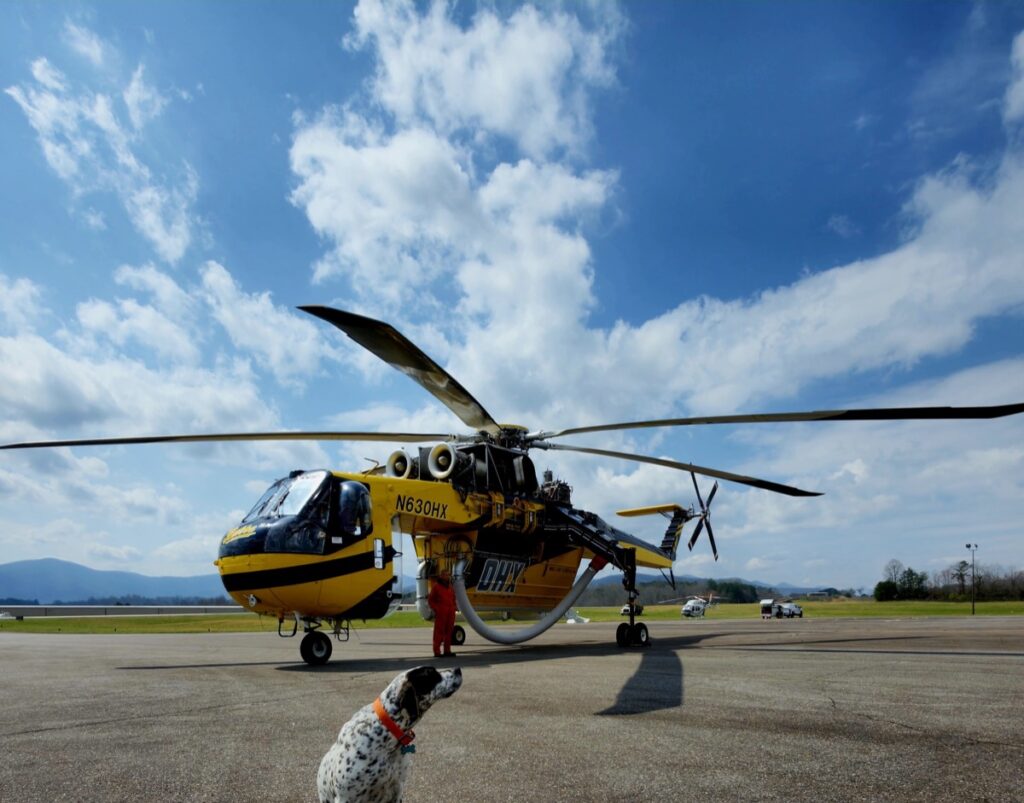
And the Blairsville Municipal Airport has seen an influx of wildfire suppression efforts in the region, including hotshot crews and fire prevention teams, with airport personnel supporting ongoing efforts “by providing fuel services and a place for aircrews to rest and regroup during operations.”
Local drought conditions can be found at https://www.drought.gov/states/georgia/county/Union, and though no one knows how long the current drought will last, Fire Chief Dyer said people can rest assured that their local Fire Department and others “are always prepared.”
“This is our fire season – we have extra resources in our county to respond to any incident,” Dyer said. “Just be careful. We’re ready to respond, but everybody needs to use some common sense; wait until the drought is over before burning.”