From Staff Reports
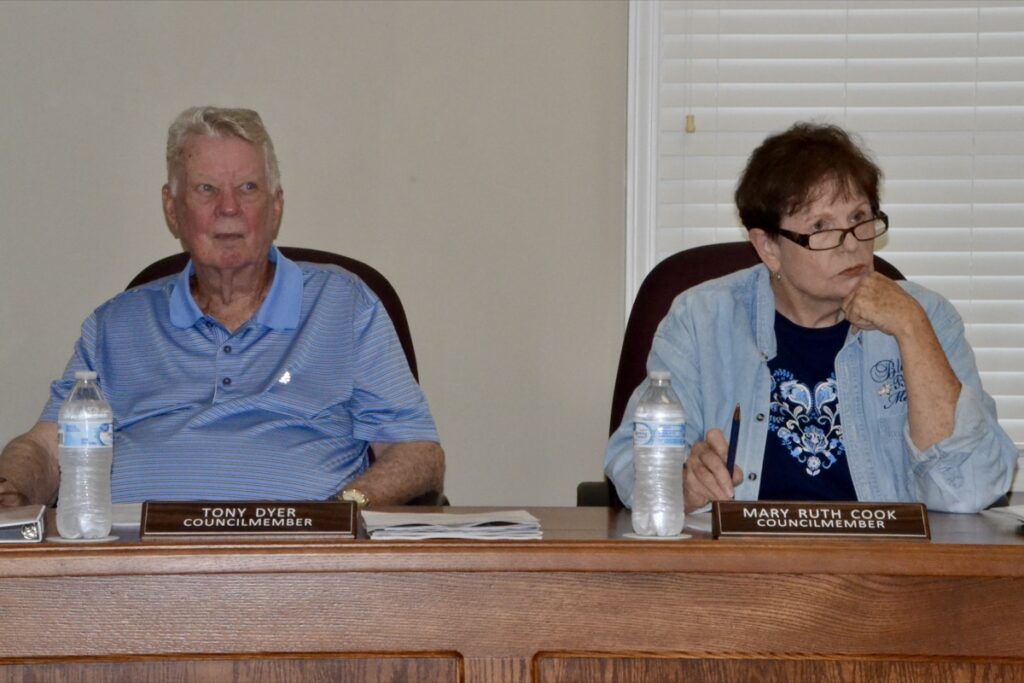
The Aug. 12 regular meeting of the Blairsville City Council and Mayor Robert “Buddy” Moore featured a packed agenda, with plenty of new business involving municipal finances.
One big agenda item involved the council voting to approve an intergovernmental agreement with Union County Government for the imposition of the new Floating Local Option Sales Tax, or FLOST.
Last year, the Georgia General Assembly passed House Bill 581, which was signed into law by the governor and ratified in a statewide constitutional amendment vote to establish a new adjusted base-year homestead exemption, aka the “floating” homestead exemption.
The law also created a new sales tax known as FLOST that can be imposed to offset property taxes, as opposed to the Special Purpose Local Option Sales Tax that must be applied toward capital projects.
Like SPLOST, in order to be imposed, state law requires that a majority of county voters approve FLOST via a local referendum.
Union County and the City of Blairsville decided earlier this year to “opt in” to the new exemption, paving the way for the local governments to call a FLOST referendum to be decided on by voters here.
“The sales tax goes to the State Revenue Department, and then they give it out to the county at the end of the year,” City Attorney Marvin Harkins said. “The county would then distribute the percentage to the city no later than Feb. 28, once a year.”
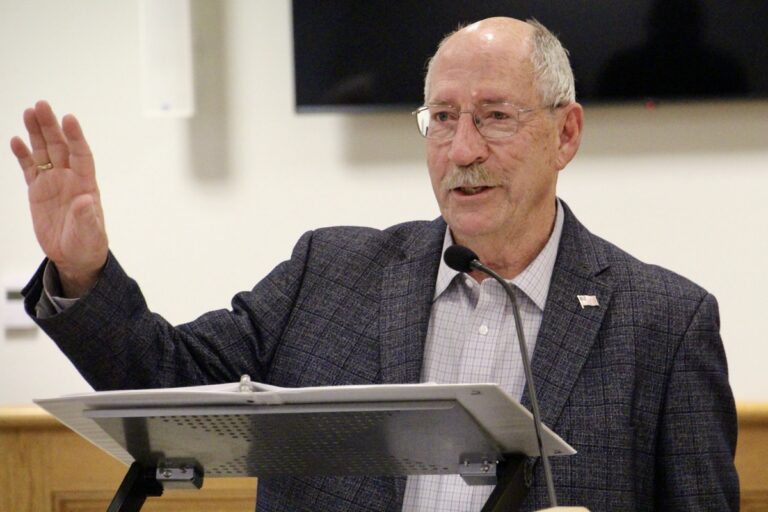
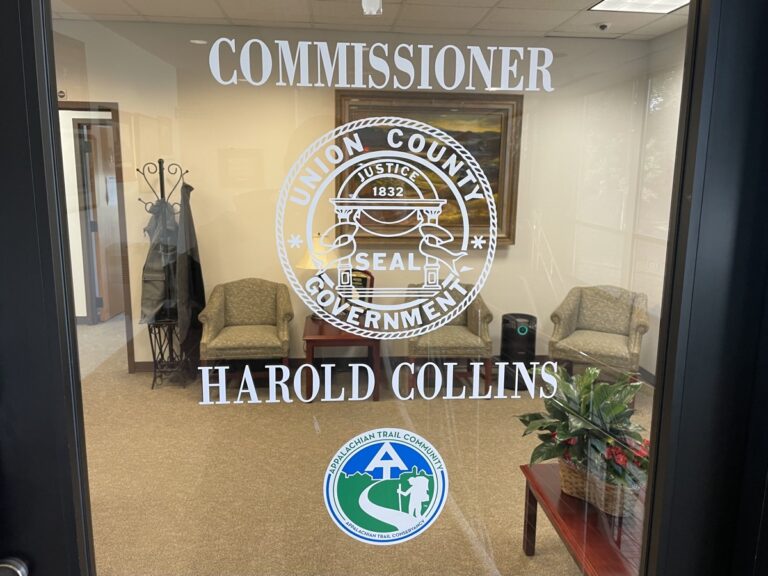
By press time, the county had yet to call a FLOST referendum, but Sole Commissioner Harold Collins told the newspaper he would definitely be calling a special election for this November to give voters the chance to decide whether they want FLOST as a major break in property taxes.
Should voters approve it, the 1% FLOST would last for a duration of five years.
“We are going to put it on the ballot,” Collins said. “It’s 99.5% county, because the state gets a half a percent for handling (the collections), but all it can go toward is reducing county property taxes, not school taxes.
“A lot of people are getting it mixed up; it will only (reduce) the county property tax, and it could possibly wipe the county tax plumb out.”
The Commissioner’s Office has scheduled a Town Hall Meeting to educate the public on FLOST. This meeting is set for Thursday, Sept. 4, at 6 p.m. inside the Union County Schools Fine Arts Center.
In other business, the council held a first reading of the ordinance to set this year’s millage rate for property taxes. To keep collections revenue-neutral compared to the previous year, the city is once again looking to adopt its rollback rate, which is 1.064 mills for 2025.
This rate is expected to be adopted following a second reading in the September city meeting.
Picking up some unfinished business, the council approved raising benefits for current and future retirees via a variable Cost-of-Living Adjustment, increasing the city’s monthly contribution to its Defined Benefit Retirement Program by about $8,000 to a total of $25,370 a month.
“We’ve talked about this before; it’s just a matter of bucking up and spending the money,” Moore said, with the council reacting favorably and agreeing unanimously to the decision.
On a similar note, the council faced an 8% increase on 2026 medical insurance costs with the Georgia Municipal Association; with Moore’s statement of “it is what it is,” the council approved renewing with GMA.
Among other business, several agenda items tackled issues related to the city’s treated water supply. The first involved approving a company to conduct a state-mandated lead service line inventory, with QGE LLC being hired to perform this service for $73,525.
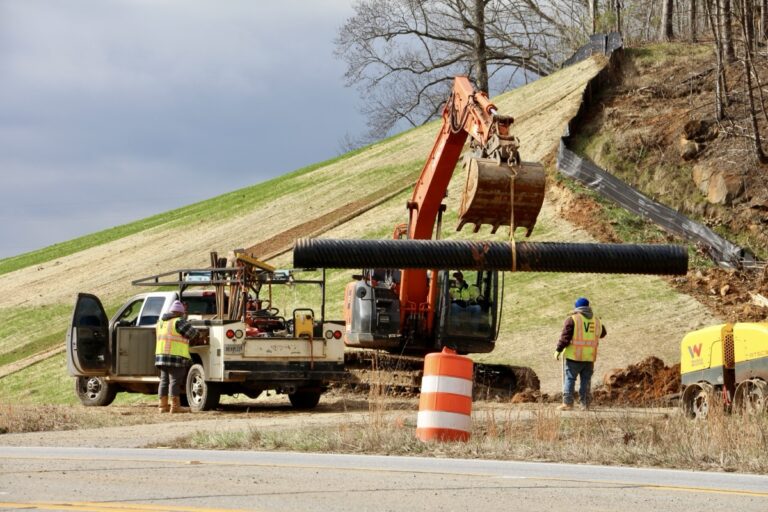
Meanwhile, to nip ongoing water leaks in the bud, the council approved an agreement with Rye Engineering to perform a leak detection survey of about 75 miles of water distribution mains across the city for an expense of $49,500.
“(The survey measures) basically the entire system,” clarified Moore, adding that “it’s something we need to do” as the city works to track millions of gallons of water that is unaccounted for each year. Such losses are a common problem among water distribution systems across the state, generally attributed to aging infrastructure.
Only the mains will be surveyed, not the service lines. The survey is estimated to take 15 days at most, and while it’s impossible to correct 100% of leaks, the hope is that “a good portion” will be found.