Union County voters have spoken – the local sales tax will remain at 7% when 2026 rolls around.
Placed on the ballot by the Union County Commissioner’s Office, the Nov. 4 Floating Local Option Sales Tax Referendum failed by a 686-vote margin.
A total of 5,884 voters showed up to the polls over three weeks of early voting and Election Day, with 2,599 voters supporting property tax relief, and 3,285 voters rejecting the additional 1% sales tax that would have offset property taxes.
That’s 44% of the participating Union County electorate for FLOST and 56% against it.
FLOST would have resulted in an extra 1% sales and use tax in Union County starting Jan. 1, 2026, raising the total sales tax that everyone paid – including visitors – to 8% for every dollar spent on eligible goods and services at places like grocery stores and other retail establishments.
The trade-off to the sales tax would have been a steep reduction specifically in county and city millage rates, which was estimated to bring about a 70% savings to county and city property taxes.
But it was not meant to be.
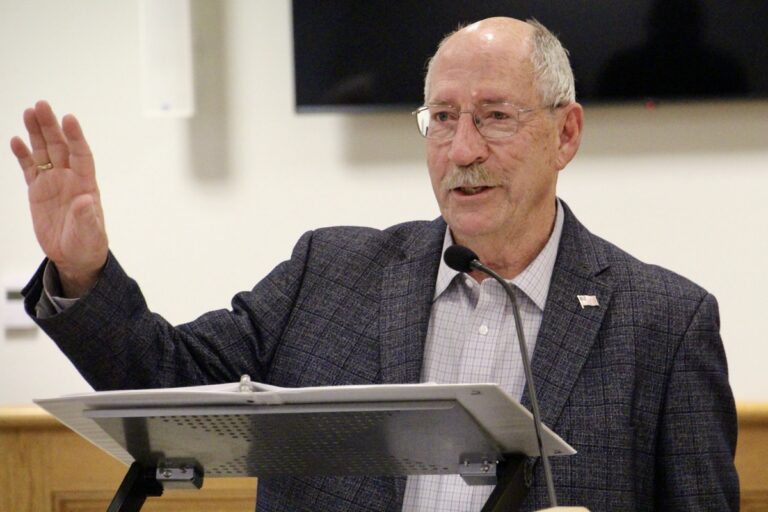
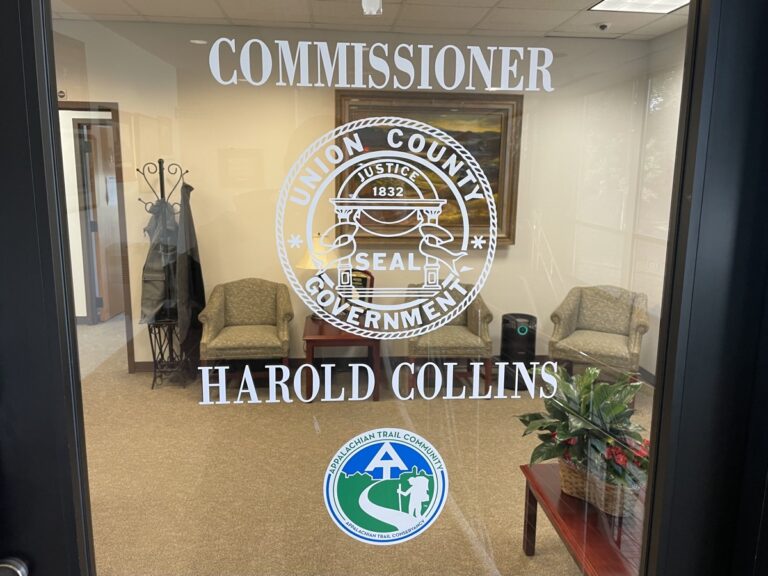
While Sole Commissioner Harold Collins supported the measure, he is happy that voters used the referendum opportunity to make their voices heard.
“I done my part by putting it on the ballot,” Collins said. “All I heard during campaigning was that you need to put stuff to vote, and so I put it on the ballot so they could vote on it, and I’m pleased with that. The people decided.
“I thought we educated (voting residents) the best we could with the Town Hall, in the newspaper and Facebook, so they made a choice. That’s all I know to do.”
Added Collins, “I thank everyone for coming out and voting. I’d like to have seen a bigger turnout, but we did have a decent turnout, so I thank everybody for coming out and voicing their opinion.”
Now that FLOST has failed, it will be at least a year before the Commissioner’s Office can attempt the same referendum, which Collins said he has not yet considered because he is turning his attention to the upcoming continuation of the Special Purpose Local Option Sales Tax.
There’s also the vote to decide whether to change the local form of county government to a board of commissioners next fall, and on the Union County School District side of things, the expected Education-SPLOST continuation vote coming up in 2026.
“It’s too early to even think about putting FLOST back on there,” Collins said.
Collins anticipates the SPLOST continuation going to a vote in the General Primary Election in May. He highlighted the importance of SPLOST – which pays for things like roads, bridges, the new 911 Center, the upcoming courthouse roof replacement – in keeping property taxes lower.
“If SPLOST doesn’t pass, there will definitely be bigger consequences,” Collins said. “SPLOST brings in roughly $7 million a year. That $7 million has got to come from somewhere, and if the SPOST doesn’t pass, you know what that means.”
Added Collins, “We’ll come out and probably have a Town Hall meeting after the first of the year when we get everything (together) that the SPLOST in the past has done for the county. We’re going to give people an idea how important it is to have SPLOST.”
As for the Special General Election for two Public Service Commission seats, Union Countians overwhelmingly supported the Republican candidates who ended up losing handily to their Democratic opponents in the statewide race.
Union County Elections Board Chair Libby Stevens is proud of the local turnout, in which Union County ranked eighth in Georgia for early voting. About 28% of the local electorate voted through Nov. 4 to put Union ninth overall in the state, which had a turnout of about 22%.
At the Voting Center on Election Night, Stevens asked to give a special shout-out to the Pat Colwell Precinct, which featured the most Election Day votes of all 11 Union County Precincts with 391 ballots cast.