Every day last week, Union County Schools made the difficult decision to cancel on-campus instruction for students, though in-person classes for Friday, Jan. 17, were made optional to provide flexibility to families who felt comfortable dropping their kids off at school.
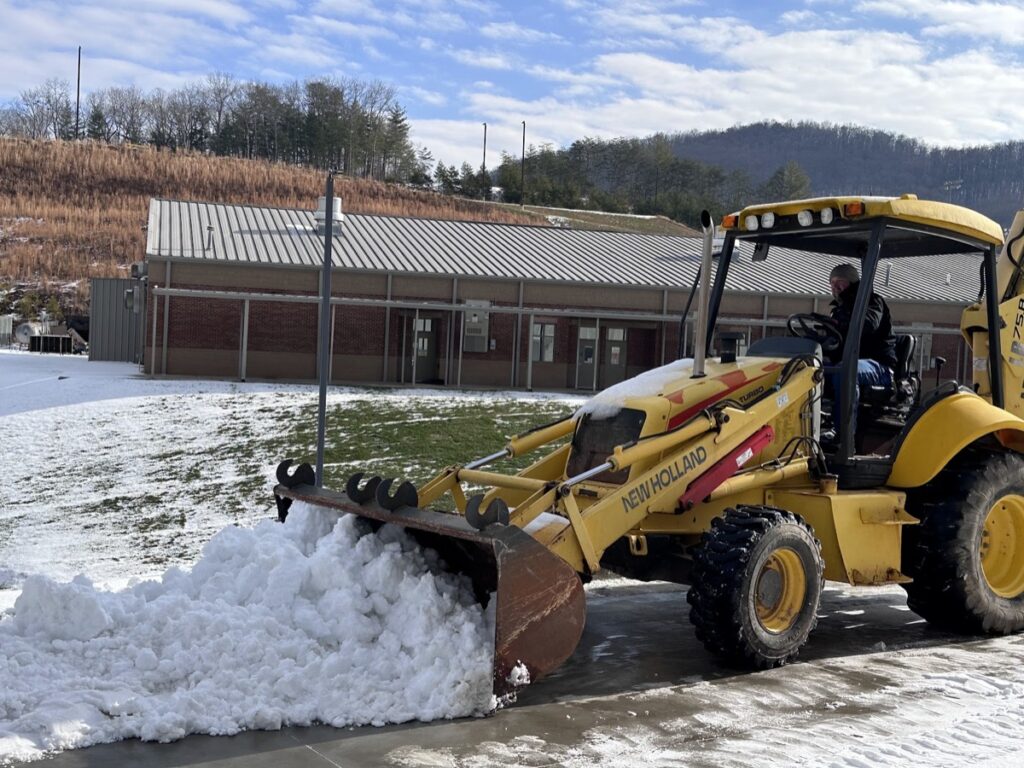
The reason for the closures was the extended period of icy backroads stemming from the Jan. 10 winter storm that dumped between 2 and 3 inches of snow throughout the county.
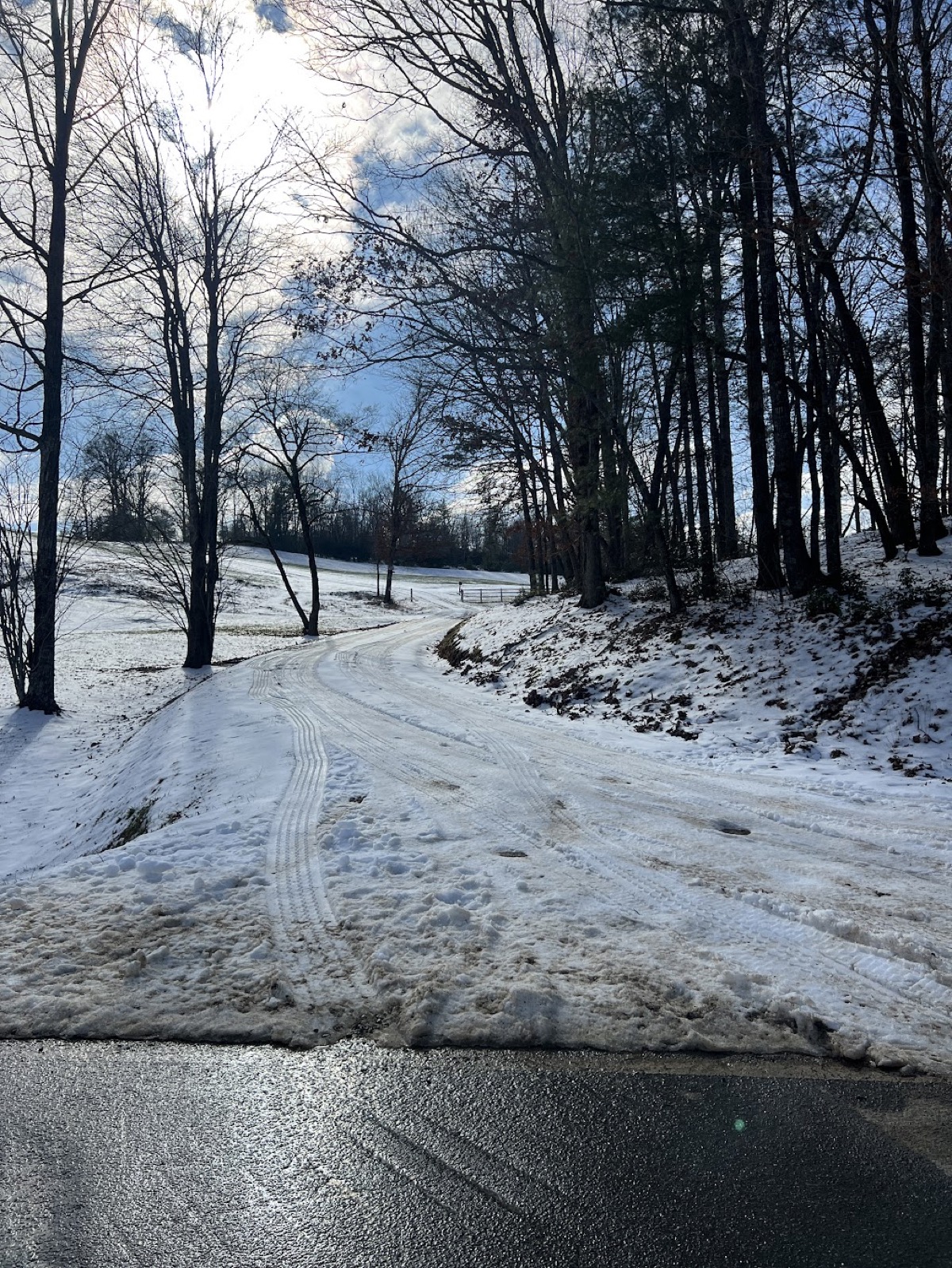
Trouble areas stubbornly persisted on sideroads primarily because of shady spots not melting quickly enough and overnight lows in the teens and 20s refreezing both runoff and road ice that managed to melt in daylight hours.
Citing safety as the No. 1 priority for students, Union County Schools canceled on-campus instruction for five days, including Friday, Jan. 10, plus Monday, Jan. 13, through Thursday, Jan. 16, with Jan. 17 being the optional campus day.
School Superintendent John Hill said that about 800 of the district’s roughly 3,050 students attended the optional Friday, which was a first-of-its-kind experiment to gauge the interest in such an option.
“Attendance was a little bit better than I figured,” Hill said, noting that school buses did not run for the optional day. “Of course, the rest of the kids were doing at-home learning, so it was about 25% (of the student body on campus).
“It wasn’t terrible considering it was an optional day … We had a few employees that still had issues getting to work, but we had plenty of people here to serve the children.”
Hill said the schools received good feedback from parents, with some saying they wanted to keep their kids at home while others appreciated having the option of attending after five days without classes.
“I appreciate everyone’s willingness to give it a trial run, and it seemed to work fairly well,” Hill said.
The daily decisions to nix in-person classes last week rested on the fact that nearly all 28 bus routes remained dangerously slick in too many places from compressed snowpack, introducing a greater risk of children being injured in wrecks if buses rolled to pick them up.
“Any time you have a bus accident, even if it’s minor, it’s a very serious situation,” Hill said. “The kids have to be medically checked, and anyone with any minor injury would go to the hospital. The risk/reward of operating a bus in icy conditions – it’s just not there.”
Hill was worried about the system’s young drivers, too, who commute via personal vehicles to the High School and likely have little experience navigating icy roads. Risks are compounded by the region’s steep mountainous terrain intensifying the hazard for all drivers in icy conditions.
“Buses and teenage drivers on ice is just an extremely scary proposition for me,” Hill said. “We hated to be out as long as we were. We were really appreciative for the work that folks did do from home, but it was just that a lot of places that didn’t get sunlight were still pretty icy.”
Thankfully, warmer daytime temperatures and regular treatment by the county Road Department contributed to a gradual decline in ice on backroads last week, but the schools remained closed out of an abundance of caution because of continued bad driving conditions.
Rain and 50-degree temps Saturday greatly diminished lingering snow and ice, but the National Weather Service has been warning of dangerously cold conditions this week, forecasting several days in a row of subfreezing temps that started Sunday night.
The weather service has also been monitoring the potential for more snow this week, with local predictions at press time Monday hovering around a 30% chance for Tuesday/Wednesday precipitation, though forecasts pointed to a more southerly snow trajectory.
But if it does snow again here, the extreme cold this week will likely make any amount hazardous for travel, and people will want to mind the 4 P’s during intensely cold weather like this, that is, take precautions for People, Pets, Pipes and Plants.
Of course, at some point, the show must go on, and Superintendent Hill said he was hopeful that classes would resume Tuesday after the long weekend considering the Martin Luther King Jr. holiday on Monday, Jan. 20.
“We’re hoping the rain Saturday will clear things out and the snow stays south, and we can go to school next week,” Hill said. “Normal operations is the goal.”
Still, Hill is prepared to cancel classes again if travel conditions do end up deteriorating beyond the point of being safe.
During the extended closure, schools educated students in a limited yet ongoing capacity, so the kids will get credit toward the 180-day school calendar despite missing in-person classes, with no make-up days required by the end of the year due to this event.
The schools have drawn on past experiences with at-home instruction during the COVID-19 pandemic, supplementing older students’ time away from classes with computer-based learning made possible due to a lack of widespread electrical and internet outages from the storm.
Hill said teachers have moved away from online learning at home for younger kids, as educators feel that more hands-on, pencil-and-paper assignments are better for these students if they must stay home.
So, the day before the snowstorm, teachers of younger-grade students sent them home with at least three days’ worth of physical class materials like worksheets. And with the extended closure, teachers communicated additional work to parents through an app used by the school.
Of course, at-home learning for public school attendees is “never a replacement for the quality they get being one-on-one with a teacher,” but given the circumstances, the schools have gone with the best available options.
Hill believes that any learning loss experienced because of the closures will be made up quickly when students return.
“They’ll bounce back,” Hill said Friday. “We really need to be in school next week if possible, because the teachers will do a good, quick analysis of where the kids are at, what they’re missing.
“They have made some curriculum adjustments this week to account for the loss of face-to-face instruction, so they’ll push pretty hard over the next couple of weeks to get the children caught up.
“My biggest concern is, if we have another event move in next week, that’s going to put the children further behind. And that is concerning.”
At the earliest, Hill said he would be making the call about Tuesday classes on Monday afternoon, and the latest on Tuesday morning, both after press time. Should classes resume this week, Hill advises parents to “bundle your children up,” because it’s going to be incredibly cold.
The Union County School System was not alone in choosing to safeguard students with closures; neighboring mountain schools also closed last week for the same reasons.
Regardless of being in good company, Hill said that canceling classes is rarely an easy call due to the impact on children’s learning and the hardship placed on families.
“It’s a major consideration,” Hill said. “I really dislike not going to school because I realize fully that there are a lot of parents that need to be at work.
“That puts them in a hard spot when they have to go to a job site or an office to work and they don’t have any way to have childcare; that is a major challenge for parents. So, you have to weigh that out with the safety risk of having buses on the road for a regular school day.”
Hill has been involved in making school cancellation decisions for over a decade, which entails checking all bus routes daily, conferring with local first responder agencies, attending special weather briefings and more to make the best decision in uncertain circumstances.
“Sometimes, we get it wrong, but I always want to attempt to err on the side of caution when it comes to the safety of our students,” Hill said. “I just want to thank the parents for being patient with us and providing us some grace.
“Always know that we’re keeping the safety of your children in the forefront of our thinking. So, we appreciate all the support from the parents, because really, they’ve been extremely supportive during this.
“It’s not a tragedy – it’s just part of living in the mountains, part of winter in Northeast Georgia. And the decisions we make are always in the best interests of safety for your children, which does provide other challenges, but I would rather deal with this any day of the week than have a tragic bus accident that we can’t fix.
“This is the tradeoff between safety and being here face-to-face, but we’re always going to try to go to school if we feel like it’s safe. And if we do have to close, we’ll pivot, and we’ll do the very best we can with the situation.”