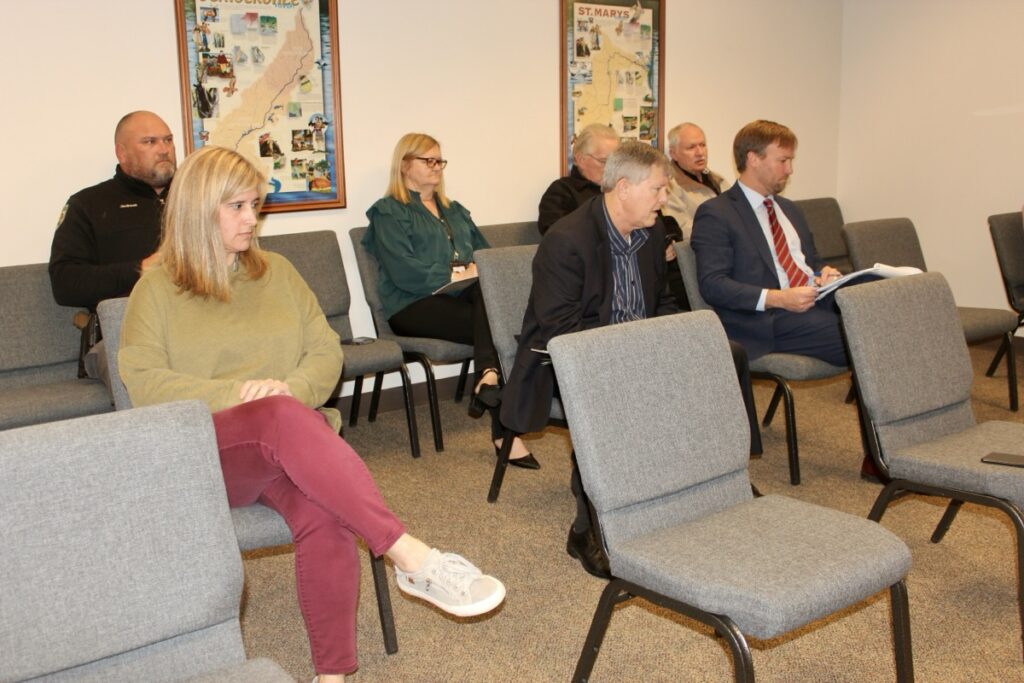
Members of the County DATE Fund Advisory Committee continued to turn tragedy into opportunity in their annual meeting on Dec. 11 at the Union County Courthouse.
At the bare-bones level, local elected officials such as the sheriff, district attorney and commissioner meet at the end of each year to allocate DATE funds in the form of local grants.
But what are DATE funds and where do they come from?
The acronym stands for Drug Abuse Treatment Education.
Between state grant monies set aside for addiction rehabilitation and revenue collected from fines and forfeited bonds stemming from drug-related cases, state law requires that the County DATE Fund be expended “solely and exclusively for drug abuse treatment and education programs relating to controlled substances and marijuana.”
That includes preventative and educational programs, such as DARE – short for Drug Abuse Resistance Education – employed for elementary school students. In fact, the DARE Program was one of two major recipients for funding in this year’s meeting, though there was a small change.
According to Enotah Judicial Circuit Superior Court Chief Judge Joy Parks, DATE funding has seen a decrease all around due to “a downturn in the economy” and fewer of the accused paying their fines.
That has made it harder to support the programs that make a difference in terms of education and recovery from addiction.
One large point of discussion in the meeting was where that money can and cannot be sent. In years past, DATE has provided support to New Hope Counseling of Blairsville thanks to the addiction-fighting efforts of Director Troy Beaver.
“(Commissioner Lamar Paris) and I do know firsthand that he does a tremendous service to this county,” Sheriff Mack Mason said of Beaver.
And while New Hope does a lot of good for the community, technically speaking, because the organization does not fall under the category of a “criminal justice” program, it appears that New Hope should not have been receiving such funds.
This year, Beaver was not present at the meeting and New Hope did not receive a grant.
“It happened anyway for several years, and I guess we were just trying to backboard justify it after it had already happened,” said Parks, as Mason condemned mental health treatment responses – and by proxy, addiction management and recovery – from state-level government.
This year, two organizations received DATE Fund grants, and despite the downward trend in income, the committee made the call to dip into reserves to support the critical local programs.
“We just want to make sure we can sustain our numbers. We keep a balance in there every year to make sure we have that money available,” Parks explained after the meeting, revealing that those reserves add up to about $45,000.
The decision to lower the total amount given to the DARE Program was finalized by the end of the meeting, fueled by the fact that students are able to fundraise and, as pointed out by District Attorney Jeff Langley, DATE needed to prioritize sustainability.
In the end, the advisory committee granted DARE $4,000 in DATE funds for the year.
The lion’s share of funds distributed for next year went to the Enotah Circuit Accountability Court in the amount of $29,044. Accountability courts often offer alternatives to incarceration for offenders whose crimes are related to substance abuse or mental disorders.