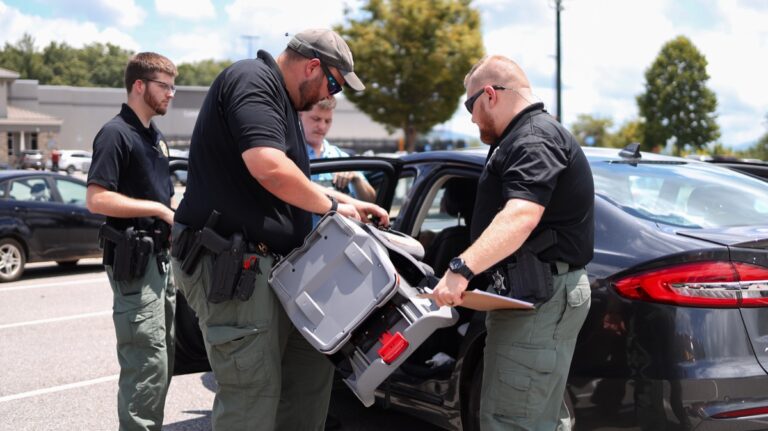
After her dog was bitten by a venomous snake, Georgia Mountain Research and Education Center Community Council Member Patricia Smith felt a responsibility to prepare her community for similar encounters.
So, on Friday, July 11, she welcomed Georgia Department of Natural Resources Wildlife Interpretive Specialist Kathy Church to lead a public presentation on snake identification and safety at the auditorium of the GMREC, aka the Experiment Station.
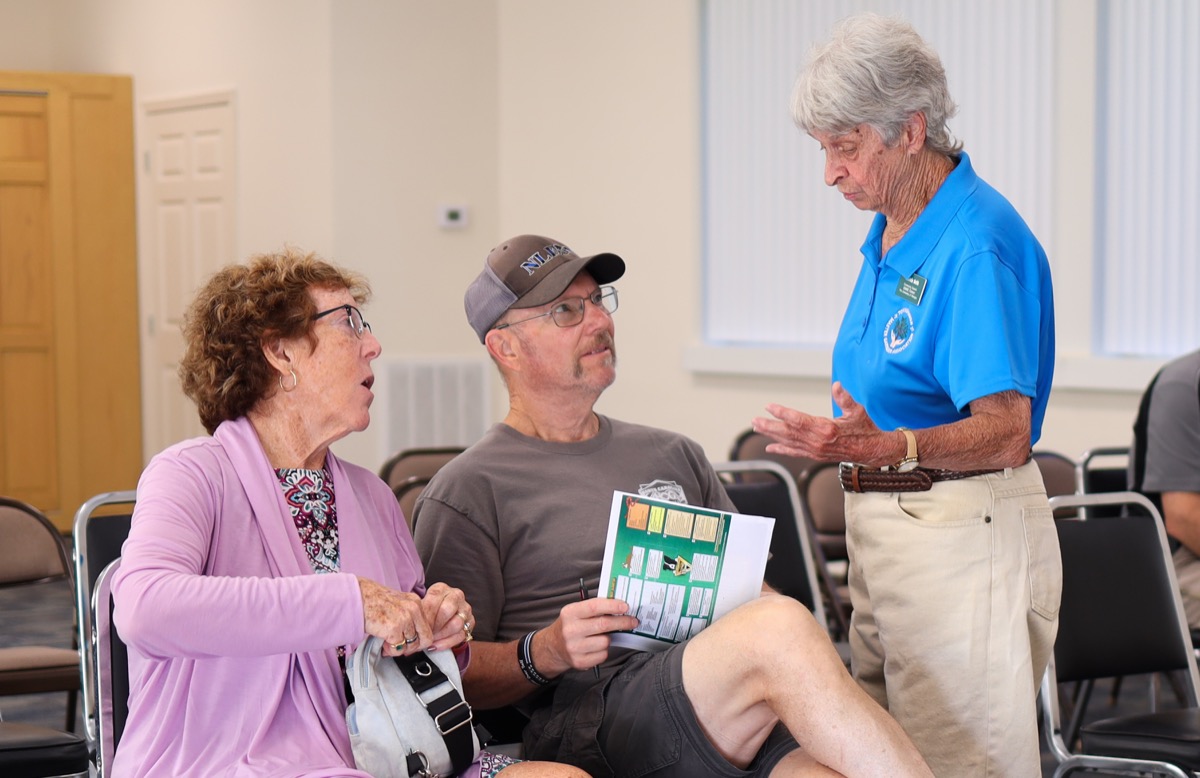
Smith explained that she had been working in her garden when she heard a “blood curdling” cry from across the yard. Moments later, she realized that her beloved dog had been struck by a snake – an emergency many pet owners are unprepared for.
Oftentimes, people are equally as uncertain when bitten themselves, so knowing what to do – and what not to do – can mean the difference between life and death. However, Church shared that venomous snake bites are rarely fatal in the United States.
“You’re actually a thousand times more likely to die by a white-tailed deer – which, of course, is car crashes – than you are by a snake,” she said. “We don’t have (the kind of snake bites) where you need to be in the hospital within an hour. It’s just not our habitat anywhere in this country.”
Despite that, it is still important for victims to seek medical attention immediately after receiving a snake bite, especially if they are anemic or on blood thinners.
“Most (venomous snakes) around here are going to mess with your blood,” Church said. “They’re what we call hemotoxic, and they’re actually going to make your red blood cells rupture.”
To slow this process, she recommends staying calm, lying down and calling 911. If possible, the victim should draw a circle around the bite and document the time.
Taking a photo of the snake can help doctors determine if it was venomous, but in Georgia, this step is not always necessary. With only six breeds of medically significant venomous snakes in the state – and just two in this region – doctors typically only need one type of antivenom: CroFab.
This antidote will work against all pit viper venoms, including that of local timber rattlesnakes and copperheads. But it is best to avoid needing the antidote altogether by knowing how to identify snakes and what to do during an encounter.
Contrary to popular belief, Church shared that rattles are not a reliable identifier for timber rattlesnakes. Because they are composed of keratin, they can fall off just as easily as a human fingernail. Additionally, color and pattern are poor identifiers for the untrained eye, as many nonvenomous snakes resemble their venomous counterparts.
With that in mind, Church suggests that people do not interact with any snake and simply walk away if they see one. She advises residents to wear leather gloves and use tools when working in gardens, wear boots in tall grass or wooded areas, and never step over anything they cannot see the other side of – because a snake could be hiding anywhere.
By following these rules, the threat of a venomous bite is nearly eliminated, allowing residents to safely appreciate the numerous benefits of snakes. Not only do these reptiles prey on undesirable pests, like rats and moles, but they can mitigate the spread of deadly diseases.
Church gave the example of a rat carrying fleas infected with bubonic plague. Once consumed by the snake, she explained, the disease will be digested along with the rat and fleas, halting its spread.
On Friday morning, Church showed off several live snakes that Union County residents can thank for local pest and disease control, such as the eastern rat snake, the garter snake and the milk snake. After her presentation, guests were even invited to pet the reptiles.
For those unable to attend the event or looking to learn more, visit the Georgia DNR website at www.georgiawildlife.com/georgiasnakes. To check for nearby veterinary clinics that carry antivenom, people can enter their ZIP code at www.veterinarysnakebite911.com/antivenin-locator.