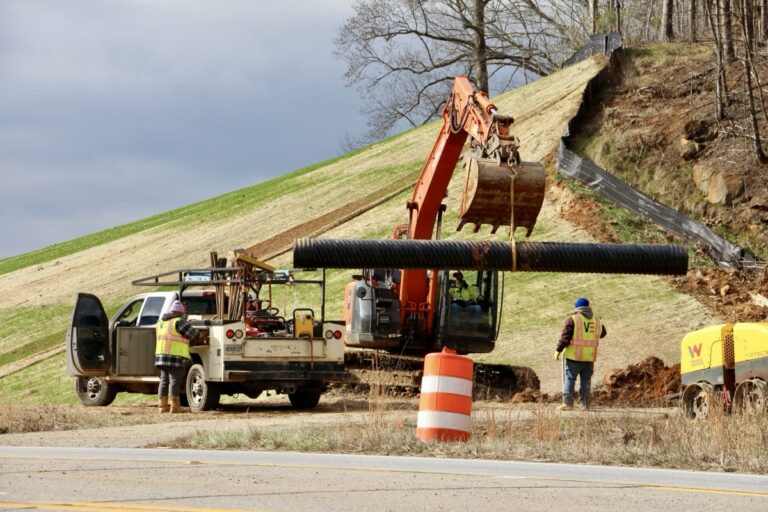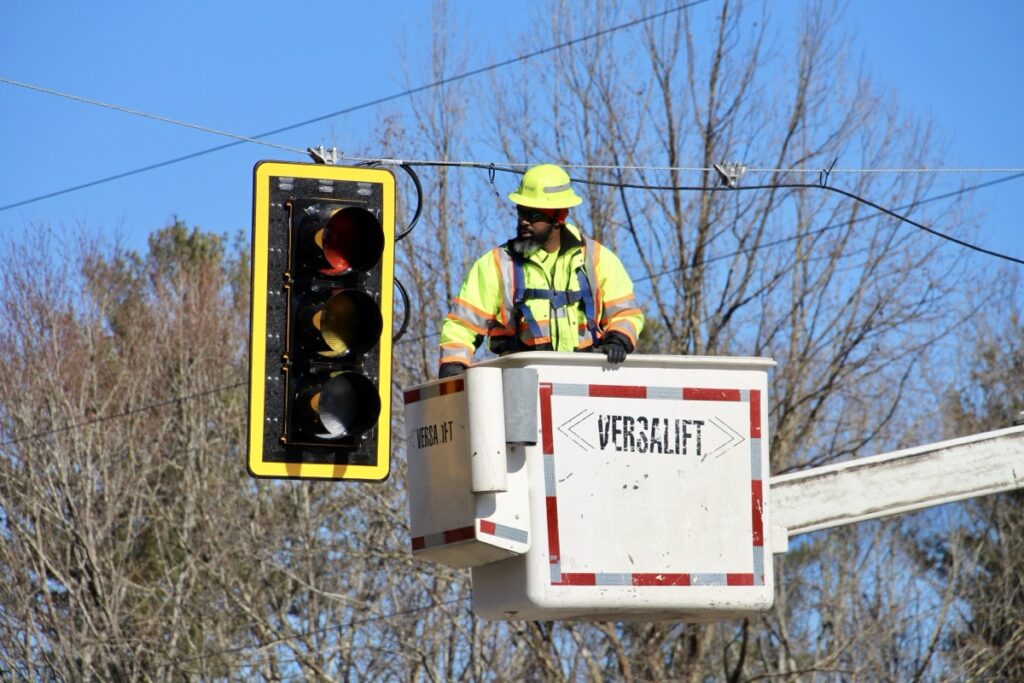
Last week, the Georgia Department of Transportation installed traffic lights at the intersection of Shoe Factory Road and Gainesville Highway, just south of Blairsville city limits.
Historically, both north and southbound drivers on Gainesville Highway have continued straight at the intersection while motorists on Shoe Factory Road wait at a stop sign to turn left or right onto the highway once traffic clears.
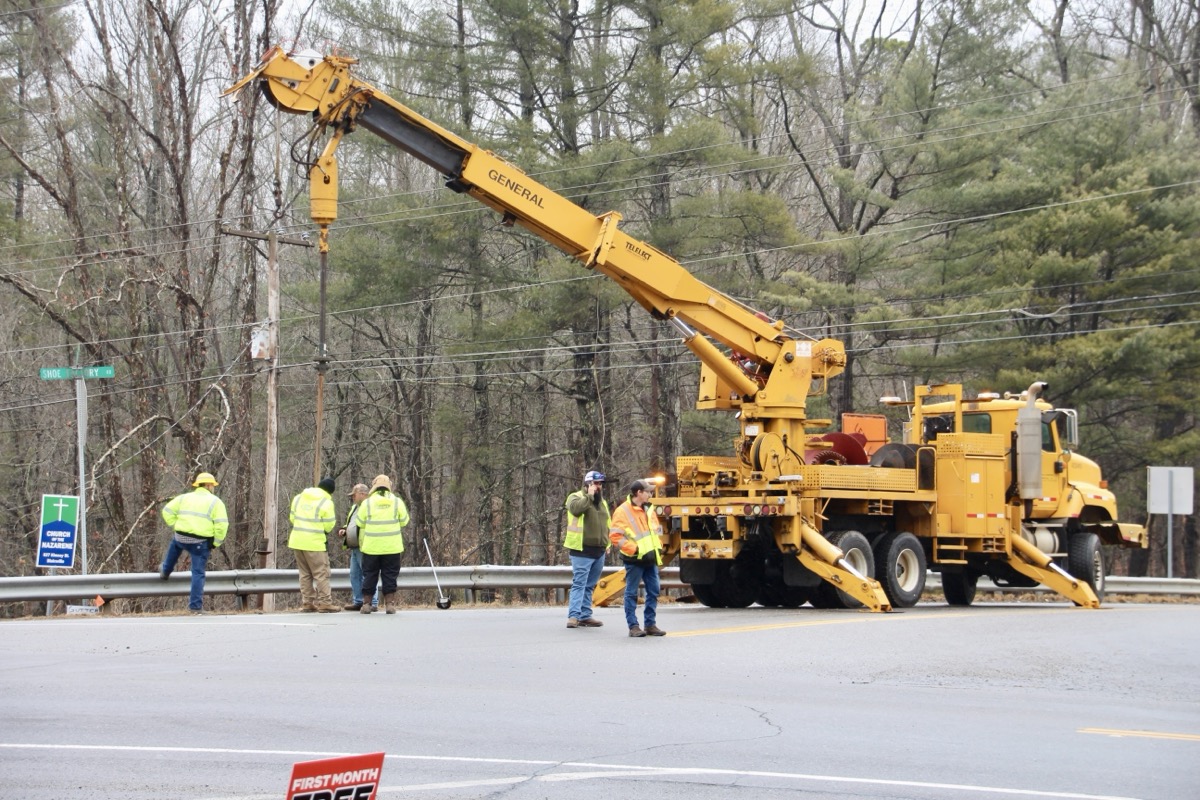
But not for much longer – as soon as the new lights are activated, they will be a big change previewing even bigger changes coming to the intersection.
The traffic lights are meant to be temporary, as GDOT plans to build a roundabout there in a project that has been in the works for a while now but is still in its early stages; roundabout construction is expected to begin during the state’s 2027-2028 fiscal year.
Because of the impending yet extended construction timeline putting the roundabout several years into the future, the state wanted to go ahead and improve safety and congestion at the intersection.
“We’ve noticed a build-up of traffic there,” GDOT District 1 Communications Officer Nathan Johnston said. “So, between now and when we get the roundabout installed, (we will have) traffic signals to help with that free flow of traffic.”
At press time, the lights were covered and awaiting the installation of electricity at the intersection. As soon as the lights are powered, there will be a 30-day “burn-in” period of red-flashing lights only to monitor the functioning of the equipment to ensure there are no failures.
During the monthlong “burn-in,” the intersection will effectively be a four-way stop, including traffic coming from the commercial property directly across from Shoe Factory Road.
If everything is working properly at the end of the 30 days, the traffic lights will be switched over to normal functions of green, yellow and red traffic control signals.
Given the “temporary” designation of the lights, there will be no left-turn signals at the intersection, and the speed limit in that area will not be changing.
Blue Ridge Mountain Electric Membership Corporation received word about the project on Monday, Jan. 27 – the day GDOT began work on the lights. BRMEMC Administrative Services Director Erik Brinke said the EMC created a work order the following day and staked the job last Wednesday, which was when the state finished its part of the installation.
The EMC sent an invoice to complete the work to the county on Thursday, and County Manager Tony Hughes said the Commissioner’s Office submitted payment that same day. Brinke said Friday evening that the EMC would commence construction as soon as the payment is received.
A date when the lights would go live and start the 30-day clock on the “burn-in” period was not available by press time, but Brinke assured the public that the EMC has placed “a high priority on this project, and we will do everything in our control to ensure its timely completion.”
GDOT decided to install a roundabout there after conducting a traffic study examining safety, congestion and efficiency.
According to the state, roundabouts offer improved safety by reducing the number of points where vehicles can cross paths and eliminating the potential for right-angle “T-bone” collisions and head-on crashes.
“Another safety improvement is promoting lower vehicle speeds, giving drivers more time to react,” per GDOT. A preliminary design concept commissioned by the county last year showed a 25-mph speed limit inside the forthcoming roundabout.
Additionally, GDOT says roundabouts reduce congestion by deploying a “yield-controlled design” that translates to “fewer stops, fewer delays and shorter queues,” and “can save on long-term costs by not requiring the same maintenance and operational costs as traffic signals.”
GDOT also points to the potential for landscaping and beautification of roundabouts and says that they “significantly reduce pollution, noise impacts, and fuel consumption.”
The total cost of the roundabout is currently estimated at $3.5 million, but that is subject to change, Johnston said, adding that, as of now, the state is expected to pick up the construction tab with no local match required.