Part-time Young Harris resident Brian O’Malley will attempt to climb to the top of the world this May when he returns to Mount Everest, the highest mountain above sea level in the world.
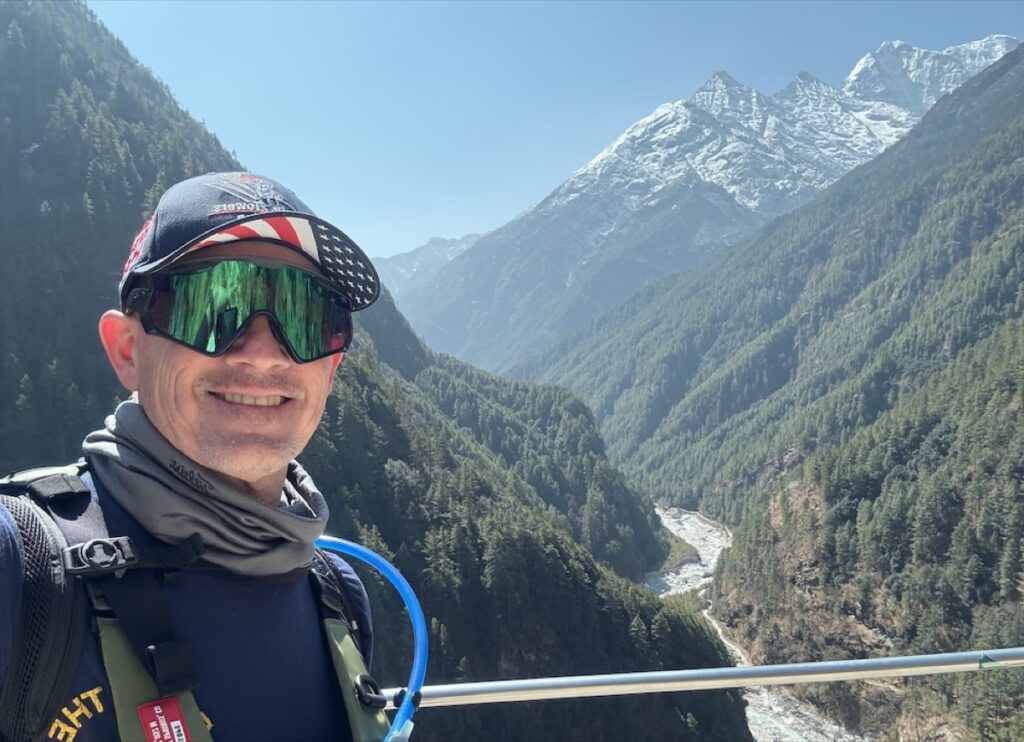
He actually turned 61 near Mount Everest last month during a trip to test himself and prepare for the great summit challenge. That expedition featured a roughly 100-mile Himalayan hike culminating at Everest’s South Base Camp in Nepal.
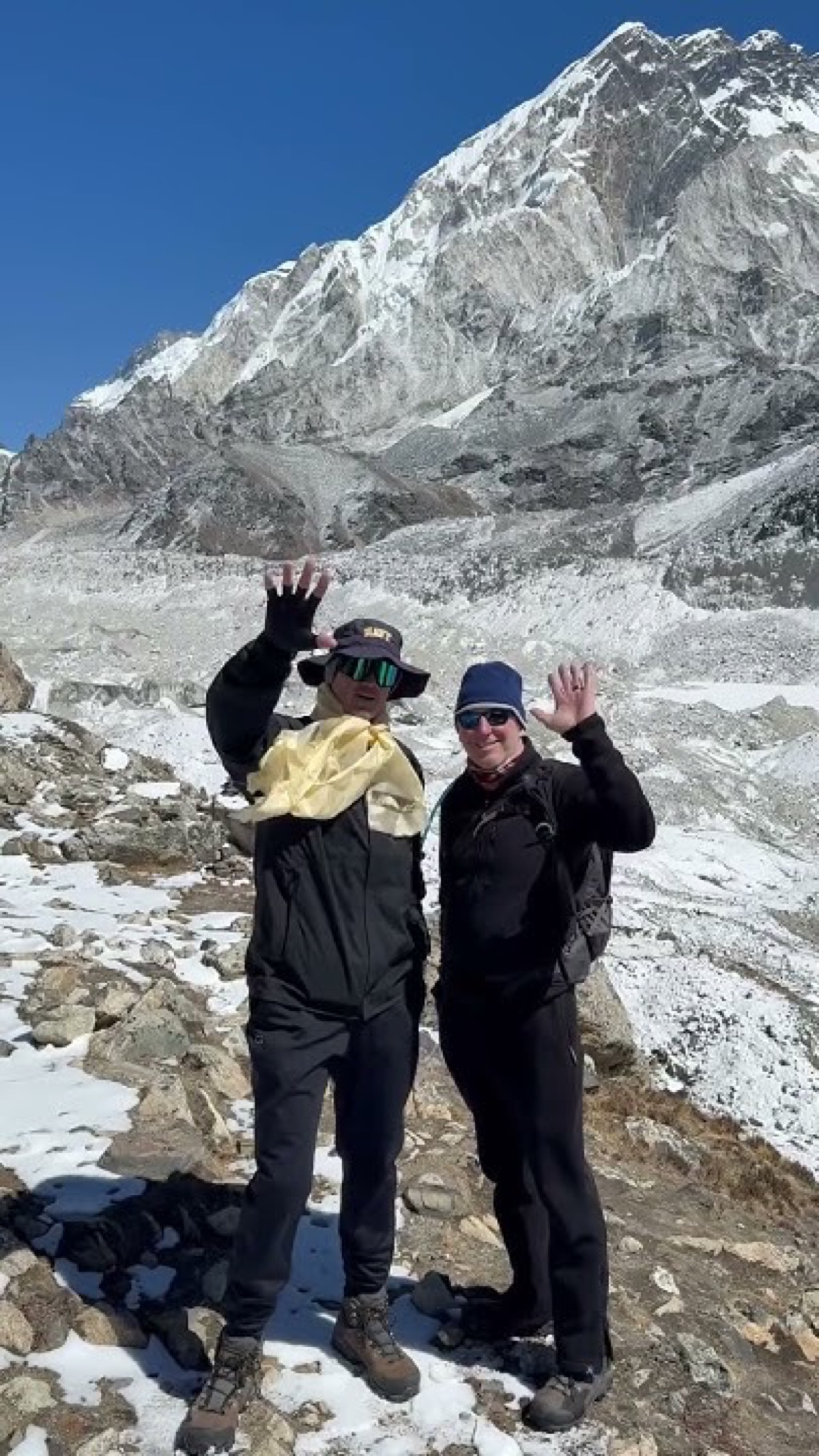
O’Malley departed on Tuesday of this week to commence his expedition to reach the top, and he hopes to make the summit near or on Memorial Day 2025.
If he succeeds, he will be one of the oldest people ever to accomplish this feat, and the oldest Navy Veteran to do so; both O’Malley and his wife Shelley served as pilots in the U.S. Navy.
Collectively, O’Malley’s entire family is made up of first responders, from firefighters to police officers and nurses to active and veteran U.S. Military servicemembers, which gets to the core of his mission to summit Mount Everest.
“I am doing this as a personal challenge before I get too old,” O’Malley said. “However, mostly I’m doing this to do my part in trying to bring both awareness and charitable support for an organization dear to my entire family’s heart called the Tunnel to Towers Foundation.”
Tunnel to Towers, or T2T, is a nonprofit that supports military members, first responders and their families in times of crisis, such as life-altering injuries or fatalities. The foundation offers resources like mortgage payments and handicap accessible housing for those affected.
O’Malley is asking anyone who is interested in learning more about T2T or following his progress on this incredible journey to visit https://dogood.t2t.org/campaign/boomer-veterans-and-first-responders-mt-everest-summit-expedition-2025/c656936.
“With utmost humility and sincerity, I know that God has blessed me with so much, including some decent physical abilities,” O’Malley said. “I feel it is my obligation to use my abilities to do God’s work helping those in need.
“I’m also hoping that what I’m doing will inspire others, especially our youth, to overcome fears and challenges in their daily lives and go out there and make a positive impact on the world.”
Climbing Everest is a monumental challenge. Most everyone knows the basics about Everest, a mountain that straddles Nepal and China and reaches over 29,031 feet into the sky. The colossal mountain actually penetrates the stratosphere and sits in the jet stream.
Winds commonly attain a speed of 100 mph, though they can climb much higher. The average temperature is 19 degrees below zero, however, when O’Malley will be climbing, he can expect a balmy minus 13.
Certainly, people know about the dangers of hypothermia and frostbite. Frostbite can occur within 30 minutes when the temperature is 5 degrees and the wind is blowing at 30 mph, though touching metal can initiate frostbite within seconds.
Avalanches, falling ice or rocks, severe fatigue or exhaustion, and the possibility of plunging into a crevice are just a few of the other deadly risks associated with climbing Everest, all of which increase near the top.
To prepare for the physical, psychological and technical challenges, climbers typically undertake extensive and expensive preparation that can last months, and even years.
Often, they acclimatize by sleeping in specialized tents that simulate high altitudes at home and/or by training in chambers that simulate low-oxygen environments. They also climb other peaks higher than 19,000 feet.
Climbers typically stagger their ascent to base camp, which sits at 17,589 feet above sea level. Then, they complete further treks to higher altitudes on the Mount Everest summit route itself over time.
O’Malley has been preparing, too.
“I’ve always been an athlete, and I’ve always trained,” O’Malley said. “My cardio has always been very good. I began to incorporate some more exercises related to climbing, working the lower legs, the core and the upper body.
“About six months ago, I bought a mask that limits my oxygen intake and makes it very hard for me to breathe while I am working out. It forces me to concentrate on my breathing.
“Every day I run 5 miles, and on Sundays I run a half-marathon. I’ve been sleeping every night in a hypoxic tent, which simulates 22,000-feet oxygen levels.
“I’m in my 60s now, and since I was a little kid I’ve read books about Everest, and I’ve always been interested in it being the top of the world. I did not understand, as I do now, the intense commitment physically, mentally and financially it takes to do something like this.
“About two years ago I got the bug in me to do something significant like climb Everest. I have zero climbing experience, and that doesn’t scare me, but it does make me nervous.
“Last month, I went out to the Himalayas to trek around the mountains there and ended up at Everest Base Camp. I felt like I had a lot left in the tank there. I didn’t get altitude sickness, and during the whole trek I felt very good.
“When I got back, my wife and kids said, ‘OK, you made it to base camp, dad, you’re done.’ One of the reasons was obviously because of the risks, but another was because of the expense. It costs $25,000 just to get a permit, and then you join an expedition team.
“Overall, it costs about $75,000. And the equipment isn’t cheap. Remarkably, a buddy of mine agreed to sponsor me, and I’m going back.”
Interest in climbing Everest dates to the early 1920s, though some controversy exists over who climbed it first.
George Mallory and Andrew Irvine attempted to summit in 1924, but they never returned. Officially, Edmund Hillary and Tenzing Norgay claimed the title for the first successful ascent and descent in 1953.
Each year, between 700 and 1,000 climbers attempt to join that elite club with success rates at about 60%. Realistically, that is mostly because of the advances in mountaineering equipment, and the journey remains perilous to this day.