Union County took another step in shaping its future last week with a Housing Summit led by the University of Georgia’s Carl Vinson Institute of Government.
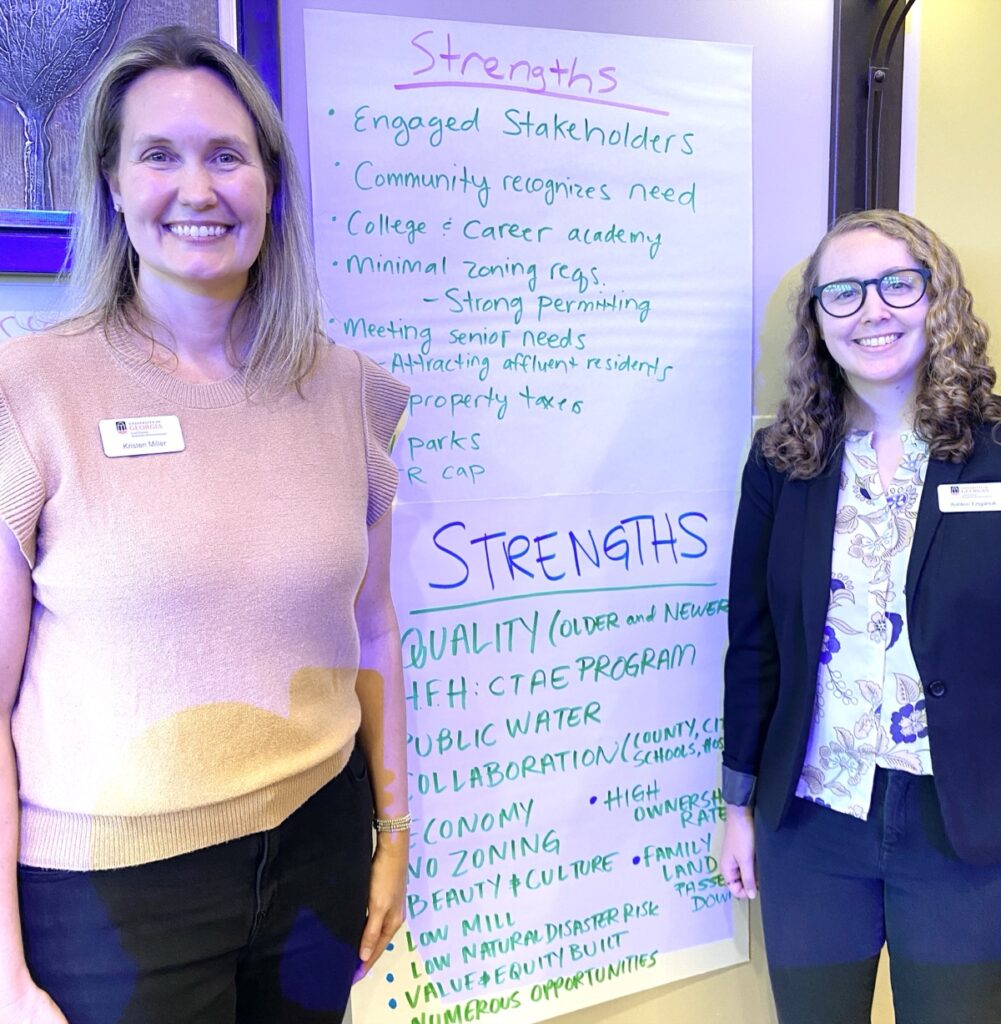
Kristen Miller of the Carl Vinson Institute guided the summit, which took place inside the Community Center on Sept. 22 in partnership with the Union County Development Authority and Union County Government.
Dozens of community leaders, business representatives, and residents attended the summit to examine one of the county’s most pressing challenges: housing.
Carl Vinson’s Ashlee Tziganuk opened the event, sharing data on Union County’s demographics, housing supply, affordability and cost burden. Participants then divided into groups to identify strengths, weaknesses, opportunities and threats facing the community.
The data painted a clear picture of the challenges ahead. Union County’s population is projected to grow 14% by 2040, with older residents making up a significant share – about 40% of the population by that time. Nearly half of local households earn less than $60,000 a year.
Housing supply remains tight. The county has around 11,000 households and 15,000 housing units, with homeowner vacancy at just 2.3% and rental vacancy at 7.1%. Housing stock is heavily skewed toward single-family homes at 79%, with limited multi-family options. More than half of all new building permits in recent years have been for single-family homes, leaving a gap in diverse housing options.
Affordability continues to be a concern. The median home listing price in 2024 was $440,000, above Georgia’s statewide median of $385,400. Mortgage payments climbed from $2,119 in 2020 to $3,155 in 2024.
With current interest rates, purchasing a median-priced home in Union County requires a household income of $105,000 to $125,000. Rental costs mirror the challenge, with median rents at $1,800 per month, requiring annual incomes of $60,000 to $70,000.
Meanwhile, many of the county’s most common jobs – in hospitality, retail, health care, construction and manufacturing – pay between $26,000 and $45,000 annually. That leaves a significant gap between wages and what’s needed to afford housing locally.
According to the presentation, 26% of homeowners and 51% of renters in Union County are cost burdened, meaning they spend more than 30% of their income on housing.
To address these issues, strategies presented during the summit included the “Three S’s”: supply, stability and subsidy. Solutions discussed ranged from zoning reform and streamlined permitting to development incentives, eviction protections, and the use of federal and state programs.
Community-based approaches, such as community land trusts, accessory dwelling units, and Habitat for Humanity partnerships, were also outlined as potential tools.
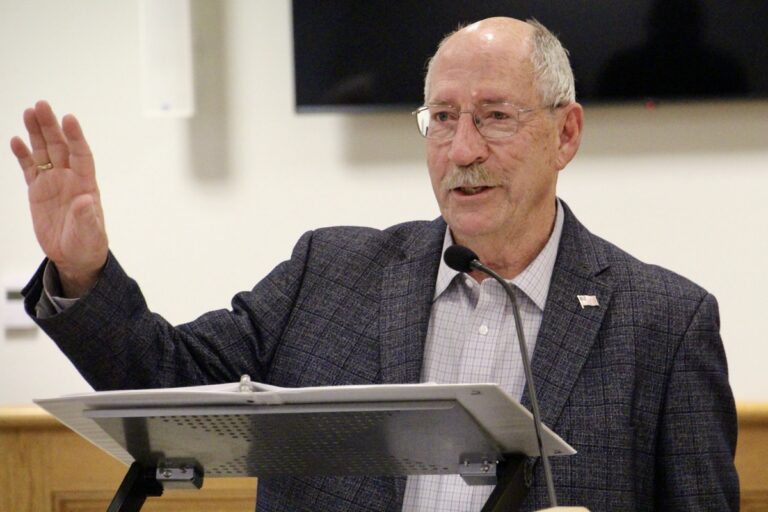
Union County Clerk and Executive Assistant Jennifer Mahan emphasized the broader role of the Housing Summit within the county’s ongoing Strategic Plan.
“The Strategic Plan will help in a lot of areas,” Mahan said. “It’ll help local businesses. It’ll help real estate individuals. It’ll help businesses who are looking to possibly open here or relocate here. So, in essence, that’s going to help the Development Authority as well.”
Mahan continued, “They’ll be able to use that Strategic Plan to see what the community needs, what we already have, what direction we’re going to go. From the governmental standpoint, for instance, the Union County Government can use that as a budgeting tool.”
The Strategic Plan is being carried out jointly by the Union County Government, City of Blairsville, and the newly reformed Development Authority. The county received a $125,000 grant from the Appalachian Regional Commission to fund the project, which is expected to be completed by February 2026. The Housing Summit fit naturally into the plan, aligning with the work of the Georgia Initiative for Community Housing, or GICH.
Union County and the City of Blairsville joined the GICH program earlier this year and are considered “freshmen” in the three-year program, expected to graduate in 2027.
The initiative, launched in 2004, provides technical assistance and training to help communities identify housing needs, develop strategies and begin implementation. Neighboring Hiawassee and Young Harris completed the program in 2024.
Communities that have participated in GICH have seen results ranging from revitalized neighborhoods and new multi-family housing developments to updated zoning codes, increased code enforcement, and access to state and federal grants. Union County leaders hope to use similar tools to address local needs.
With stakeholders from the school system, hospital, utilities, fire and rescue, local banks, and city and county governments in attendance, the summit reflected a broad commitment to tackling housing challenges.
The conversations made clear that Union County’s future economic development will be closely tied to its ability to provide housing that is both available and affordable.