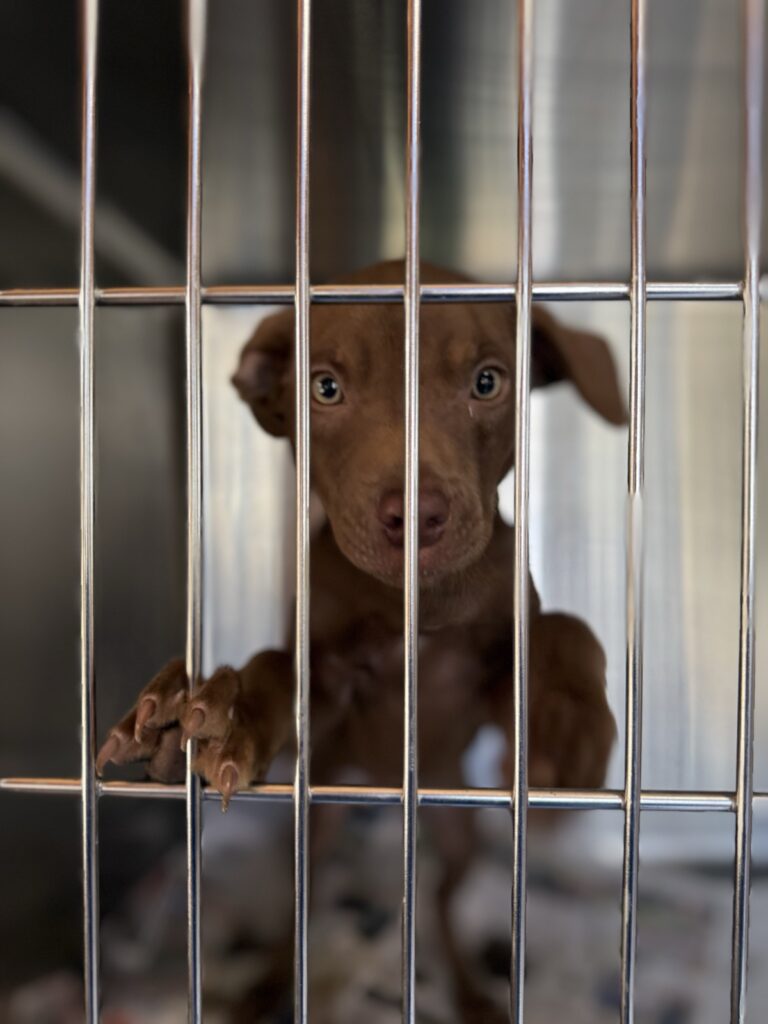
Following a “ruff” start in life, nine puppies are enjoying a second chance courtesy of the Mountain Shelter Humane Society Adoption Center. Currently held in isolation, they’re starting to perk up after surviving parvovirus.
According to Director Cassie Channell, the group is composed of two different litters of puppies, with the eldest at only 3 months old. They were born into a hoarding situation, which was initially handled by Union County Animal Control.
With the help of the Mountain Shelter, Castoff Pet Rescue and Safe Pet Project, the puppy owners received help for a situation that simply became too much to handle; 27 dogs were just too many animals to manage, especially since they were not spayed, neutered or vaccinated.
“They got overwhelmed,” Channell said of the former owners, seriously doubting “malicious intent” and holding no ill will toward them. “They didn’t do it … to be mean.”
The Mountain Shelter received 10 puppies – the most they could accept – on May 14 and 15. Though the pups initially showed no signs of the deadly disease, Safe Pet Project sent out a warning to the other organizations that the animals they took in tested positive.
“Because of that tip off, we automatically put them into isolation,” Channell recalled, sharing that about two to three days later, the Mountain Shelter’s share of the puppies began to grow ill. The meeting space outside of the shelter was converted into an isolation ward to handle the sudden influx of patients.
Parvovirus, also known as canine parvovirus, is a highly infectious disease with a mortality rate of up to 91% if left untreated. Lethargy is usually the first visible symptom, with fever, vomiting and bloody diarrhea following. Blood and protein leaking into the intestines can cause anemia, which eventually leads to shock and death.
Channell credits the quick action of the Mountain Shelter’s medical team, led by Animal Health Coordinator Natalia Peña, for no more than one puppy passing away from the deadly virus. Treatment estimates for saving the canines’ lives totaled about $6,000.
Typical protocol for parvovirus includes hospitalization or euthanasia, considering most shelters don’t have the funds to combat the disease, and the risk of infecting other animals is high. Peña likened the spread to “walking around with green paint or ink on the bottom of your shoes.”
“I worked three weeks straight,” Peña said of her attempts to nurse the puppies back to wellness, with Channell commending her 20 hours of overtime on top of her efforts. “It breaks my heart. You see them at their lowest, like when they’re in there and they’re sick, they just have this look on their face, and it kills me.”
Along with treatment, which includes medication and intravenous fluids, the team had to dress in full personal protective equipment and deep-clean the isolation ward. Dr. Kayla Lawlor, owner of Big Bear Veterinary Clinic in Hayesville, North Carolina, was invaluable for her help in coming up with treatment plans.
To lessen the risk of infecting other dogs, staff and volunteers who typically work with cats pitched in to help; parvovirus cannot spread to felines. Further measures to stop the spread involved temporarily closing intakes, and guests still have limited access to where they can visit.
“Whoever adopts them better give them rotisserie chicken,” Peña teased after weeks of enticing her patients to keep up their strength with hand-shredded poultry. “Love your animals. They’re only here for a short amount of time, and they deserve the best care while they’re here.”
The good news is that parvovirus is preventable with proper vaccination, which the Mountain Shelter offers periodically. The next opportunity for the public to take advantage of the service is planned for this fall at the Mountain Shelter Thrift Store, though Channell also has hopes that they can collaborate with Big Bear for a vaccine clinic in September.
That said, Peña said there are multiple options around the community to ensure pets get vaccinated. Tractor Supply offers low-cost vaccines, as do other feed stores and veterinarians in the area.
Peña suggested, too, to keep an eye on social media pages such as Facebook to see what services are being offered. That goes for the Mountain Shelter, which often posts updates on the Mountain Shelter Humane Society Adoption Center page.
Although small now, the puppies are expected to grow into medium-sized dogs between 40 and 50 pounds. While they’re largely “out of the woods,” they face two more weeks of isolation just to make sure they’ve fully cleared the virus.
From there, they’ll receive their vaccinations and be spayed or neutered before being put up for adoption. In all, they should be available for caring homes in a month’s time.
Anyone interested in filling out an application for adoption can head over to www.mtnshelter.org or visit the Mountain Shelter for an interview at 129 Bowling Gap Circle in Blairsville.